



The Best Shopify Affiliate Programs Apps You Need in 2026
Affiliate marketing is basically paid ads, except you only pay when you make a sale.

Tina Donati
Feb 19, 2026 · 13 min
Successful bundling offers are rooted in understanding what your customers truly need and value.

Tina Donati
Feb 19, 2026 · 13 min
Tina Donati is the Head of Marketing at Simple Bundles and has spent the past 7+ years helping Shopify brands streamline their tech stack and unlock growth through smarter product bundling, better UX, and cleaner ops.
Most brands think product bundling is just about adding a discount.
It’s not.
A high-performing product bundling strategy is about:
After working with 25,000+ Shopify merchants through Simple Bundles, we’ve seen what separates high-growth brands from the ones constantly fixing backend issues.
Here’s how to build a product bundling strategy that actually scales.
At its core, product bundling is simply selling two or more related or complementary products or services together as a single package, often at a lower price than if they were purchased individually.
But a real strategy goes beyond:
Instead, it answers three questions:
Successful bundling offers are rooted in understanding what your customers truly need and value. It's about creating synergy, making the combined offer more attractive and beneficial than its individual components.
The easy answer is that there are a ton of benefits of product bundling. But if you’re looking for more specifics, let's break down why this strategy is a total game-changer for your business.
I guarantee one of these hits your business goals:
This one's a no-brainer, right? Instead of a customer buying just one item, they're now buying two, three, or even more. Suddenly, your average order value (the average amount a customer spends per transaction) goes up. Ka-ching!
Got some products gathering dust on the shelf (or in your digital inventory)? We've all been there. Product bundling is a fantastic way to give those wallflowers a second chance at stardom.
Pair a less popular item with a best-seller, and suddenly, that overlooked product gets swept up in the excitement. This frees up valuable inventory space and turns potential losses into profits.
Let's be honest, we all love feeling like we've scored a bargain. When you bundle products and offer them at a slightly reduced price compared to buying them individually, customers perceive a higher value.
They're getting more for their money, and that feels good!
Think about a "beauty kit" versus buying each serum, cleanser, and moisturizer separately. The kit just feels like a better deal.
Sometimes, customers know they need a solution but aren't sure which individual products will get them there. Bundles act as curated solutions, taking the guesswork out of the equation.
"Here's everything you need for a perfect movie night!" or "This bundle has all the essentials for a new puppy!" You're selling products in a way that’s convenient and brings peace of mind. You're saying, "Don't worry, I've got you covered!"
A well-priced, compelling bundle can be a powerful magnet for new customers.
When someone is on the fence about trying your brand, a bundle that offers excellent value can be just the push they need. It lowers their perceived risk ("Hey, even if one item isn't perfect, the overall deal is amazing!"), and encouraging them to take that first step.
When customers feel like they've gotten great value and you've made their lives easier, guess what? They come back! That’s customer loyalty, baby.
And not only do they come back, but they also tell their friends. Happy customers are repeat customers, and they're your best marketing evangelists.
Bundling done right fosters a sense of appreciation and trust, building a stronger customer experience. It shows you understand their needs and are genuinely trying to offer them the best experience.
Okay, so you're sold on why bundling is brilliant. Now, let's talk about how to do it.
Just like there's more than one way to peel an orange, there's a whole smorgasbord of types of product bundling strategies at your disposal.
Let's dig in.
Imagine buying a full software suite – you get the word processor, the spreadsheet, the presentation maker, and so on. You can't just pick one. That's pure bundling. With this strategy, products are only available as part of a bundle, not individually.
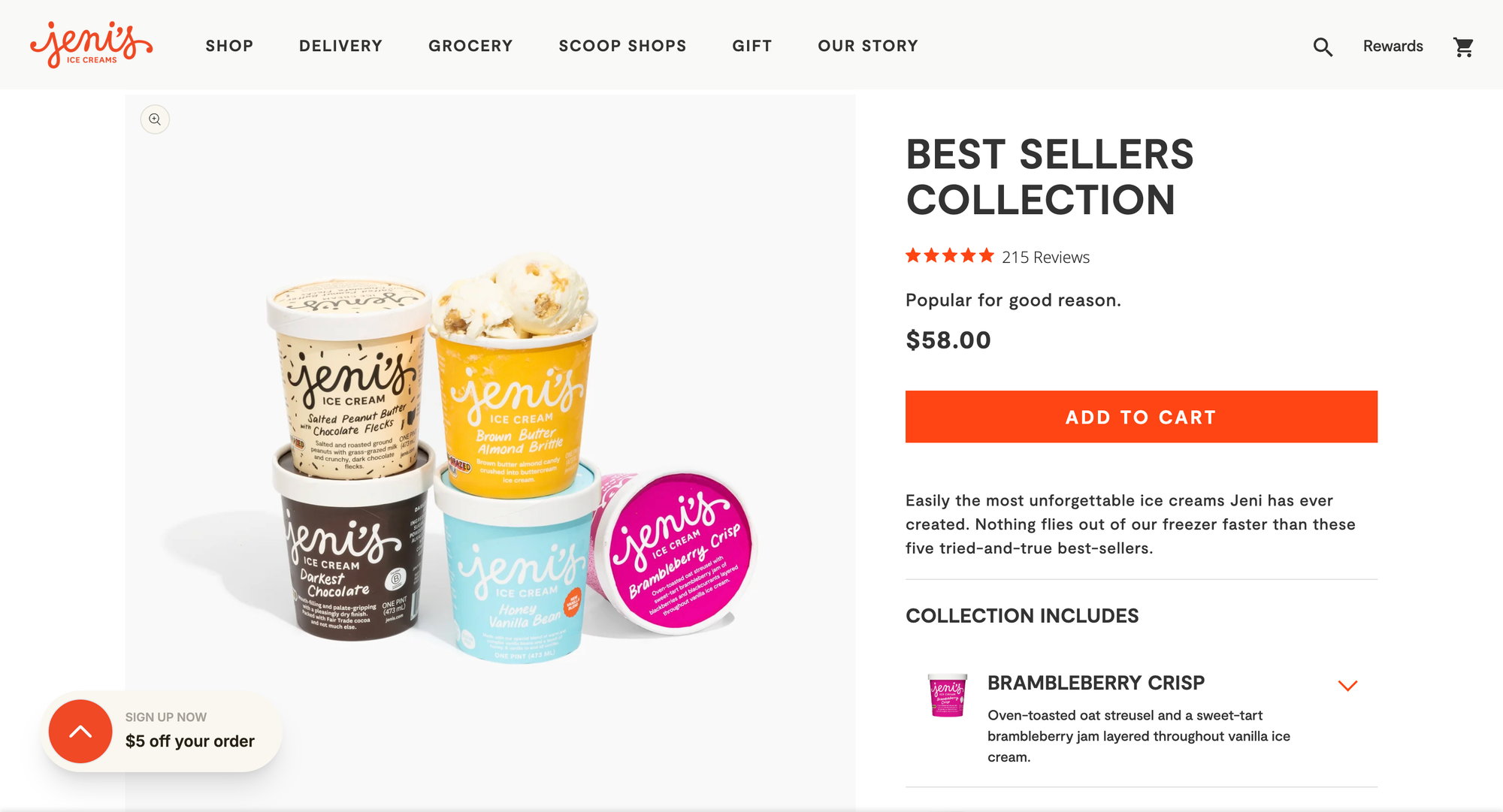
This is arguably the most common and flexible bundling strategy. With mixed bundling, customers have the choice: they can buy the products individually or as part of a bundle, usually at a discounted price.
Here's an example from Jenni's Ice creams, where they curate a set of five flavors as a "best sellers collection."
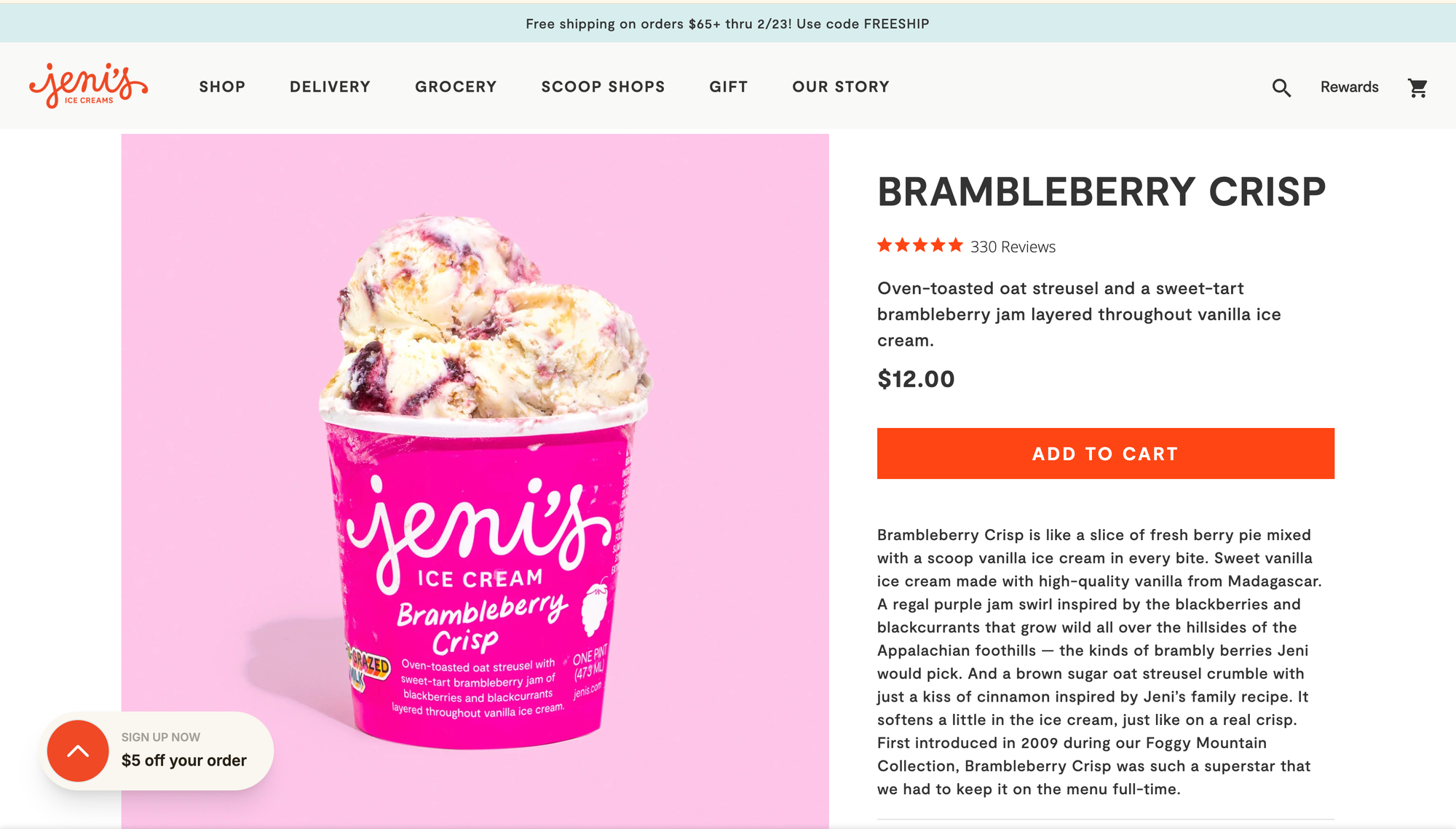
But if you'd rather purchase a flavor on its own, it's available in the product catalog to do so:
Got a product that's practically a superstar? Leader bundling puts your best-selling, most popular item front and center, then bundles it with a complementary, usually lesser-known, product. The star item "leads" the sale.
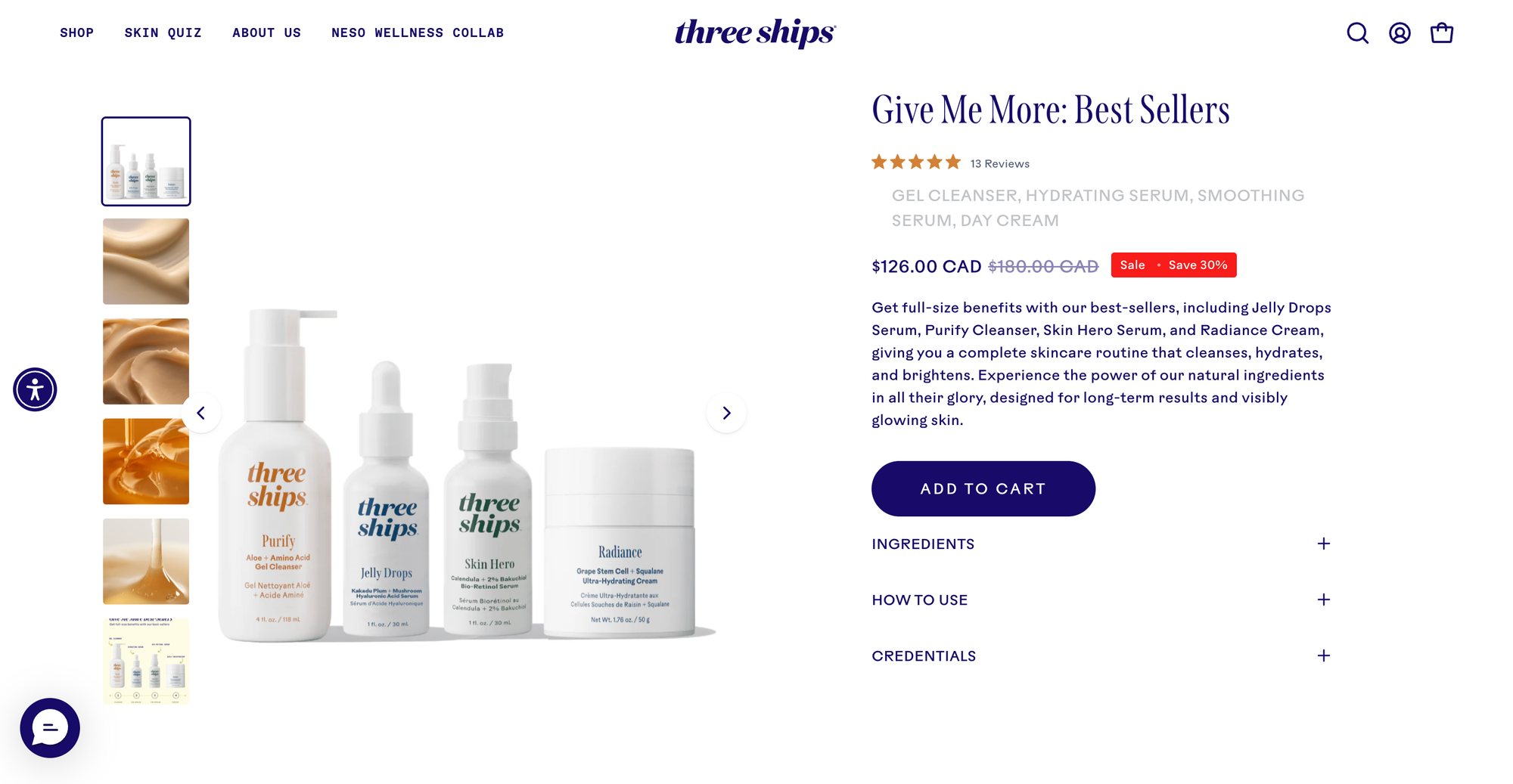
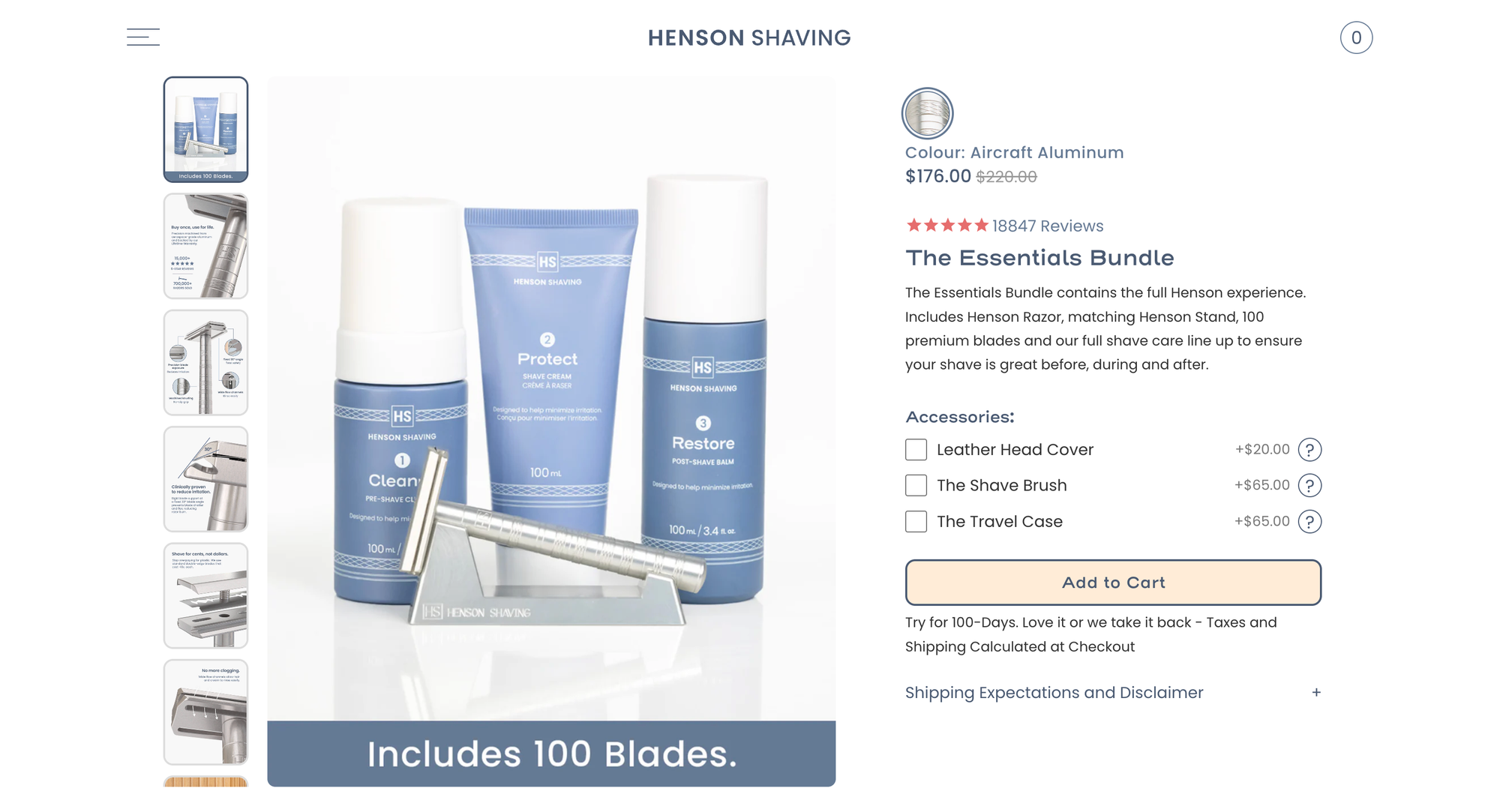
This strategy involves combining two or more distinct products that naturally go together. The magic here is that the products genuinely enhance each other's utility or experience.
Henson Shaving does this beautifully.
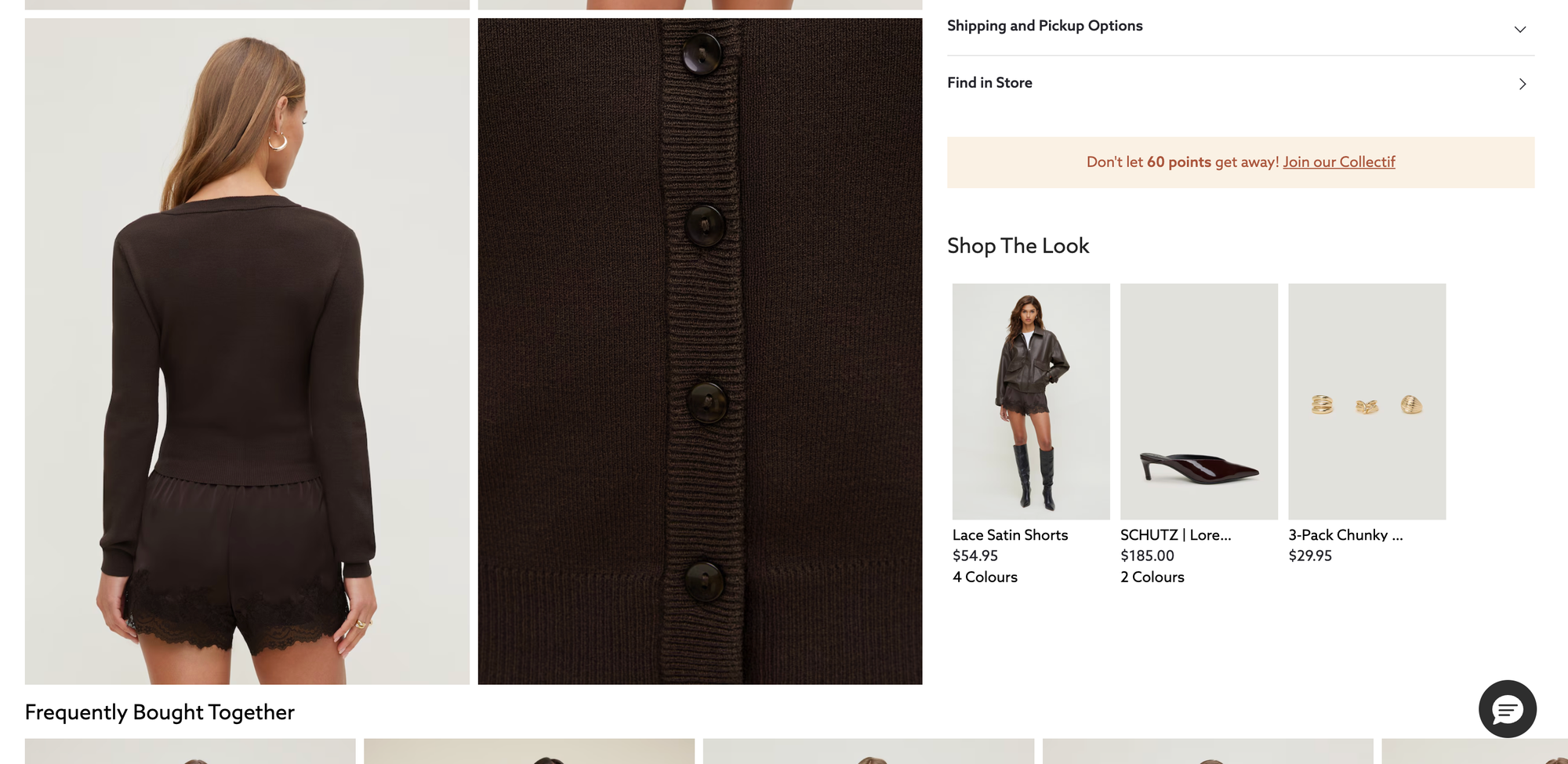
This is less about creating a pre-set package and more about framing add-ons as intelligent recommendations. It suggests complementary products based on what a customer has already selected or is considering.
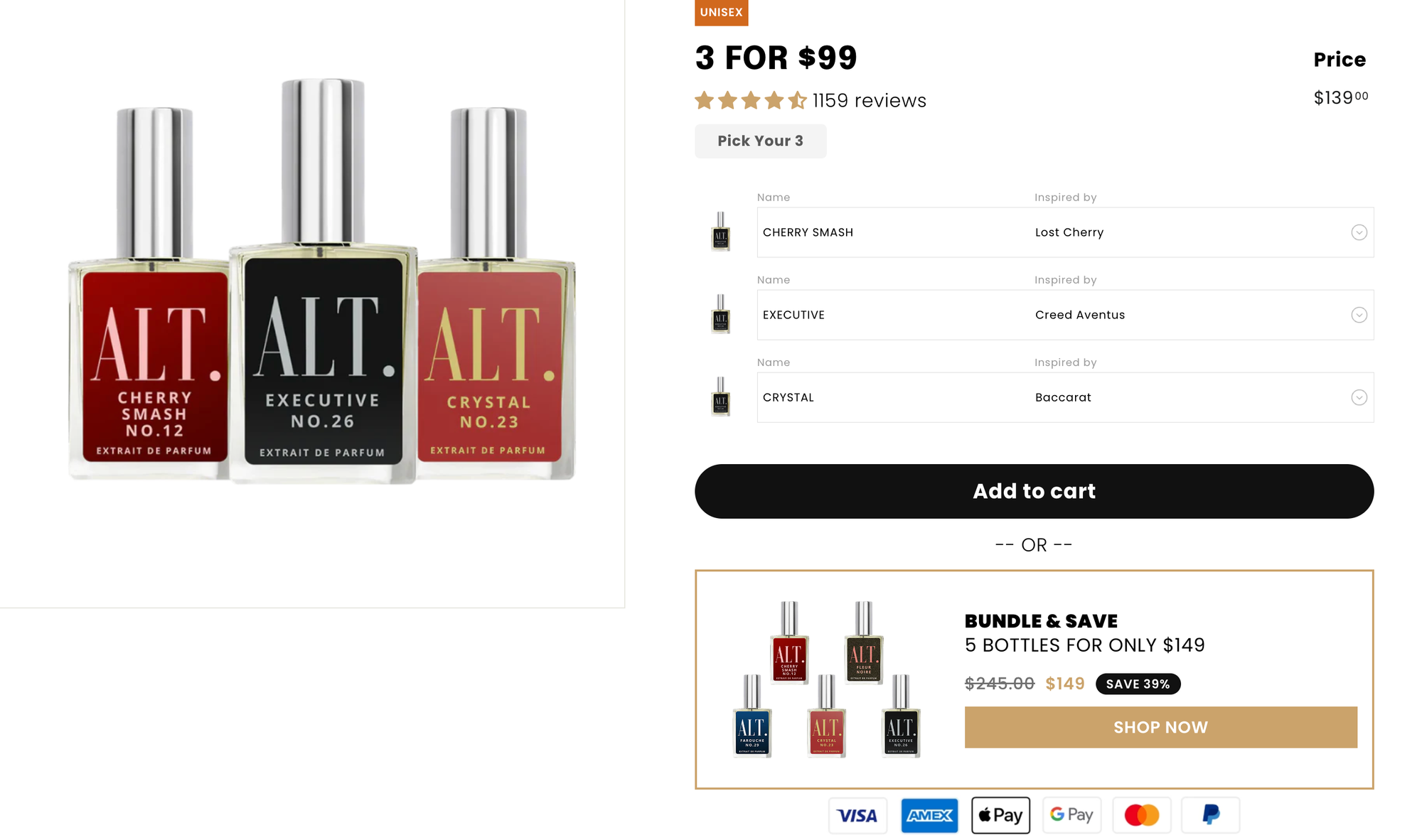
This one's as old as time, and for good reason: it works! Quantity bundling simply offers a discount when a customer buys multiple units of the same product.
Got a shiny new product you're eager to launch? Bundle it with an existing, popular product to give it a boost and introduce it to your customer base with less risk.
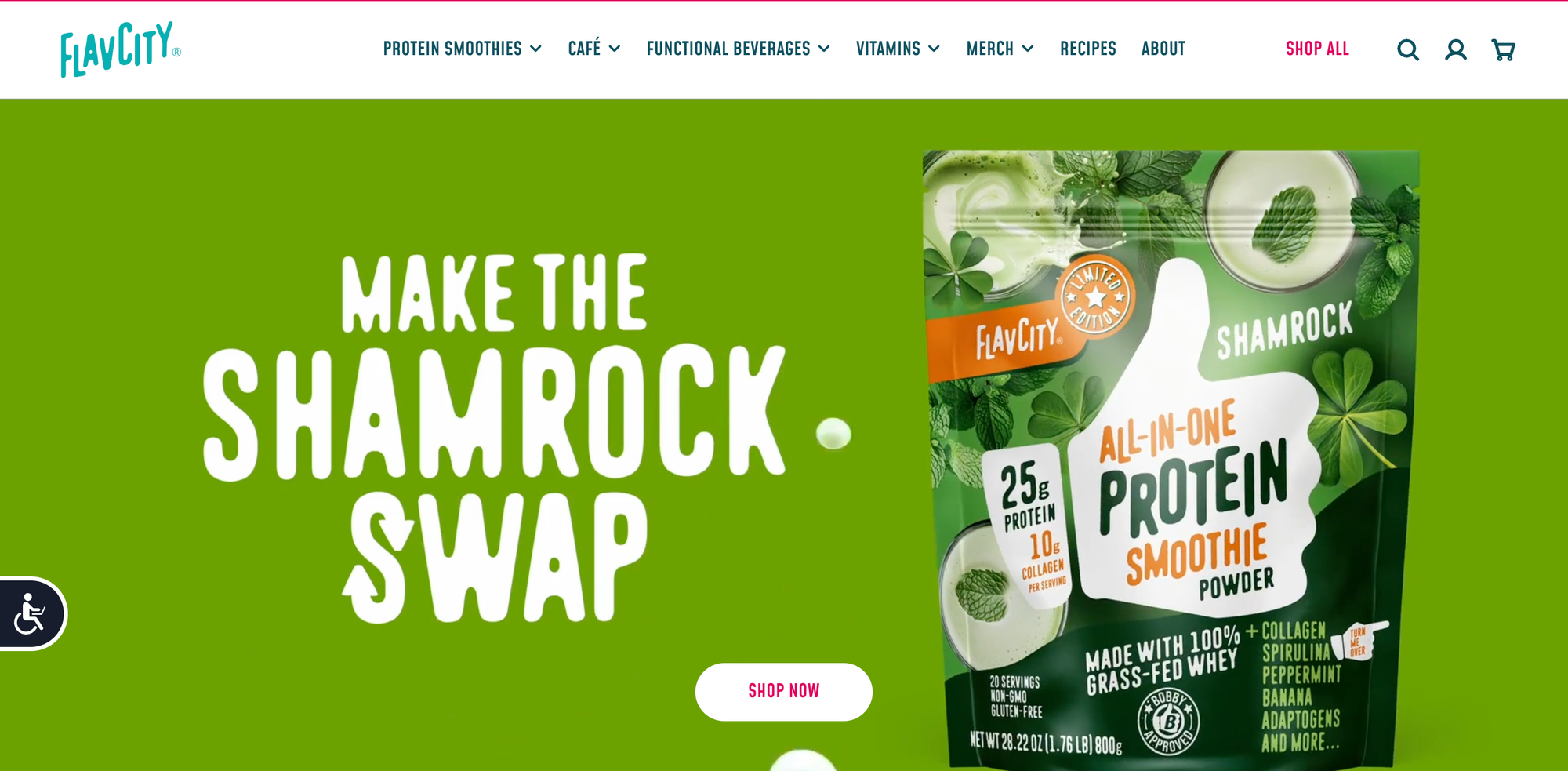
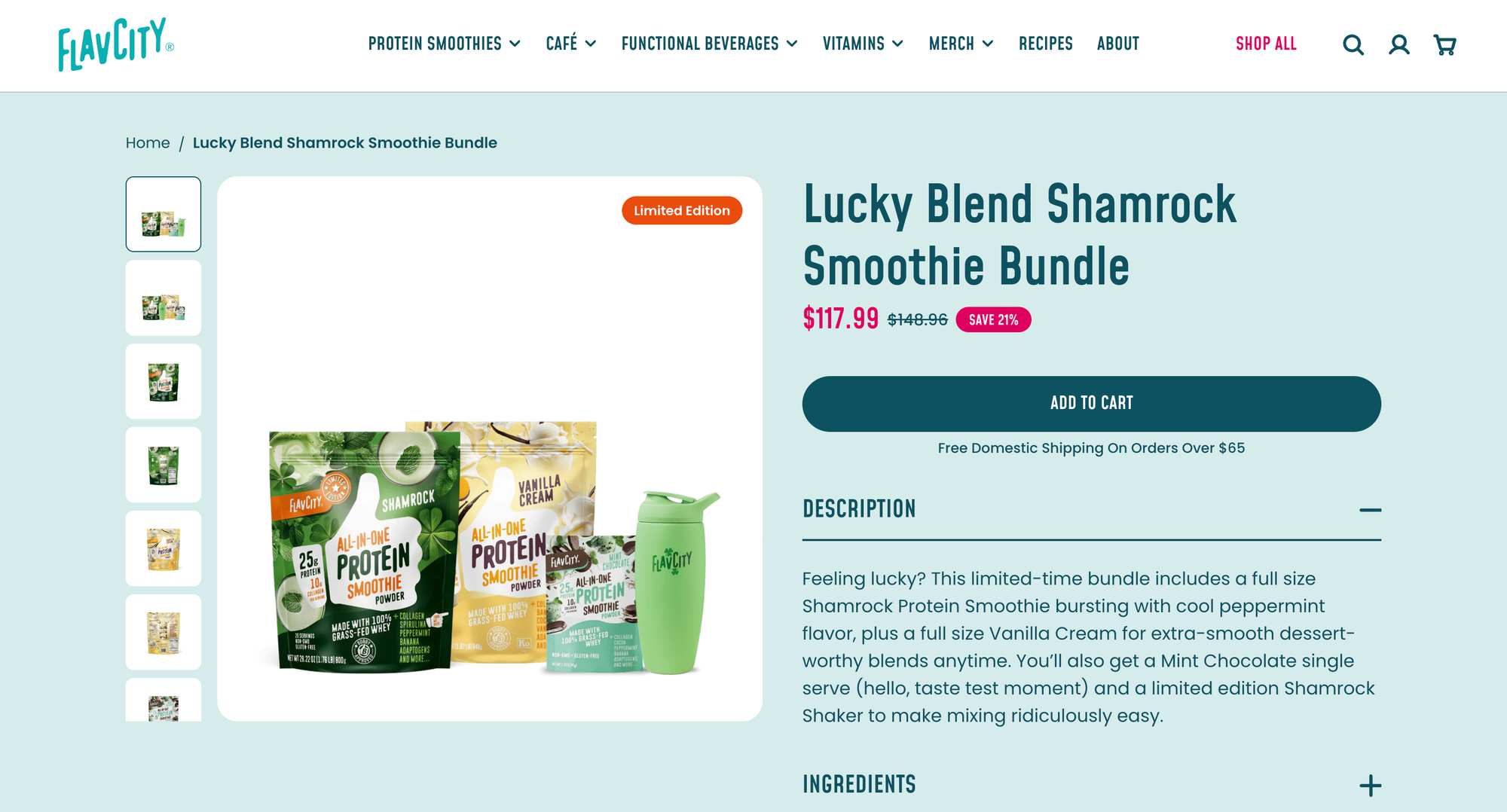
Flav City executes this type of bundling with its new, limited-edition Shamrock flavor. On the homepage, you can see it promoted as a single item.
When you click into the product, you see an option for the Lucky Blend Shamrock bundle, which features two additional flavors and a limited-edition shaker bottle.
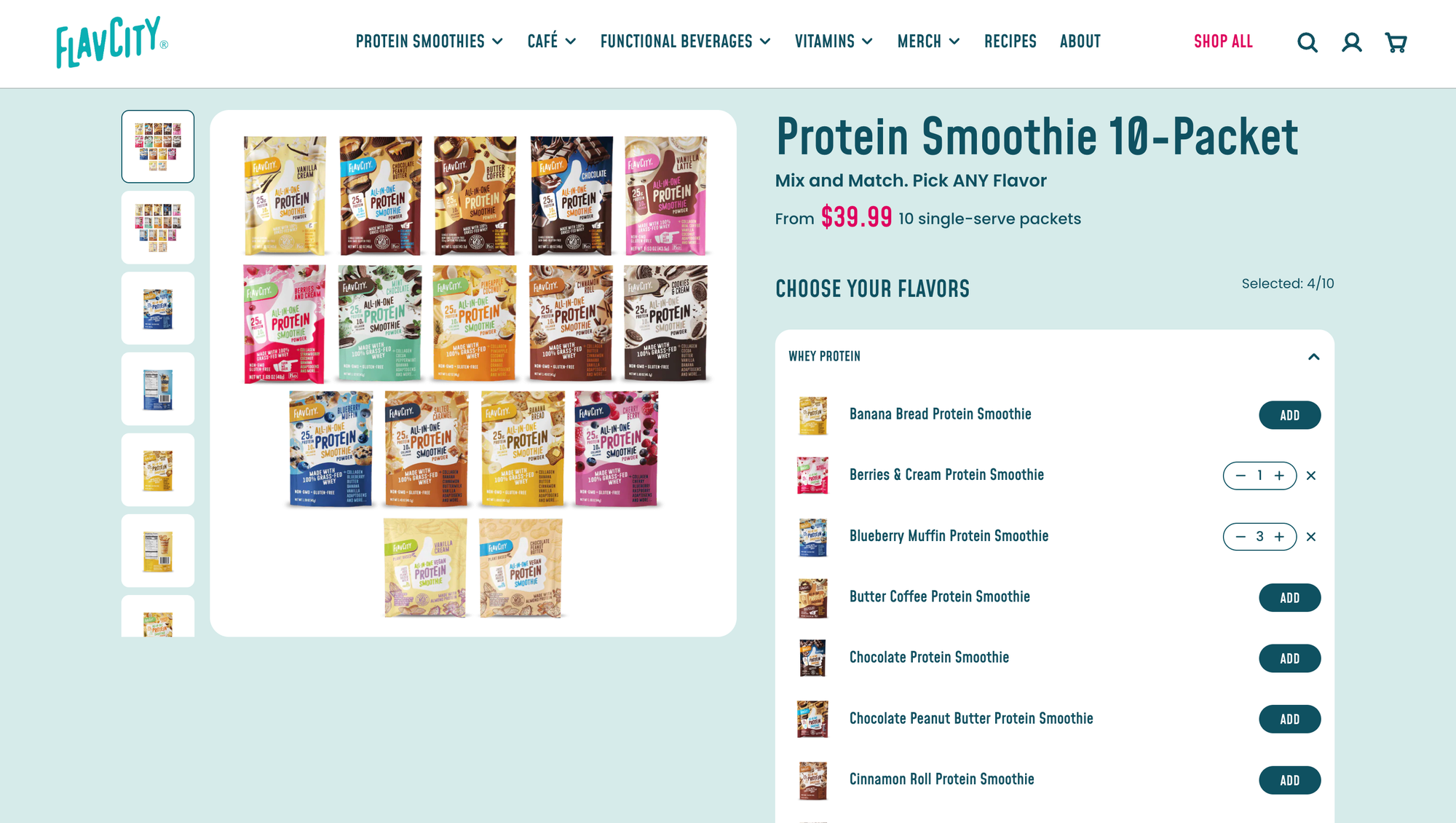
Empower your customers by allowing them to create their own bundles from a selection of your products. Sometimes this is called mix-and-match bundling or infinite options bundling. You set the parameters (e.g., "Choose any 3 items for $X"), and they pick what they want.
Okay, theory is great, but now it's time for action. Here's your step-by-step guide to actually putting these brilliant bundling strategies into practice so you can drive sales and higher AOV with your bundles.
Before you can play matchmaker, you need to know your products like the back of your hand. What problem does each product solve? What other products complement it perfectly? Which items are your best sellers, and which ones need a little love?
Do an inventory deep dive. List out your products, their features, benefits, and common uses. Think about natural pairings. Does Product A naturally lead to Product B?
This is perhaps the most crucial step—and the key to any marketing strategy, literally.
You're not bundling for you; you're bundling for them. What are their pain points? What do they value? What are their shopping habits? What combination would truly make their lives easier or more enjoyable?
Quick tip? If you're building a product bundling strategy from scratch, start with your purchase data. What products are often purchased together already?
Look for:
These patterns signal natural bundling opportunities. Instead of guessing, your strategy should be informed by real buying behavior.
At Simple Bundles, we built Bundle Magic to automate this analysis and generate bundle suggestions directly from Shopify data. With a single click, it generates:
And as customer behavior and seasons change, so do the suggestions, giving you continuous opportunities as your store grows.
Aside from purchase history, you can also conduct surveys, read reviews, or even just observe how people use your products. If you sell art supplies, do people often buy brushes with canvases? Bingo!
Pricing strategy isn’t always straightforward: create bundles with no discount, and will people purchase it? Or what if you discount too high and suddenly your margins take a hit?
This is where you strike the delicate balance between offering a compelling discount and maintaining your profitability. The bundle price should be attractive enough to entice customers but still ensure you're making a healthy margin.
Calculate the individual cost of each item in the bundle. Then, offer the bundle at a price that's, say, 10-20% less than the sum of the individual items. Experiment! Remember, the goal is increased overall sales and AOV, not just a deep discount on a single sale.
One of the biggest mistakes in ecommerce bundling?
Assuming every bundle needs a steep discount.
The strongest product bundling strategies rely on logic and convenience, not desperation pricing.
When someone buys a mattress, they likely also need:
Bundling these products together creates a complete solution — not just a discount.
Customers pay for convenience.
If your bundle eliminates multiple shopping steps, you’ve already increased its value.
The most effective product bundling strategies are built around a specific problem.
Examples:
When a bundle solves a defined pain point, customers perceive it as curated — not forced.
Your product bundling strategy should adapt throughout the year.
During high-intent windows like:
Convenience becomes more valuable than discounts.
Bundles thrive in these moments because they:
Sometimes urgency does more for conversions than a 30% discount.
There’s a popular belief in ecommerce: More choice = more friction.
That’s only partially true.
The right product bundling strategy uses the right type of bundle for the right category. And in some cases, more choice can actually increase conversions.
For example, fixed bundles (no customization) are ideal when:
Think about a skincare brand offering a “Complete Night Routine.” In this case, it shouldn’t let customers randomly swap out every product. That adds friction.
In guided purchases, simplicity wins.
But, In personalization-driven categories like:
Customers expect flexibility. A 3-pack of t-shirts without color selection often frustrates shoppers, but a mix-and-match bundle that allows customers to:
Feels empowering.
A strong product bundling strategy considers category psychology. It doesn’t apply one bundle type everywhere.
Should you use multiple bundle types? Yes. High-performing ecommerce brands often combine:
Beauty brands are a prime example:
The most effective product bundling strategies are diversified
You've created amazing bundles, now tell the world. Don't tuck them away on a forgotten page. Make them visible, exciting, and easy to find.
Showcase your bundles prominently on your homepage, product pages, and in your marketing emails. Use catchy headlines ("The Ultimate Starter Kit" or "Grab Your Weekend Warrior Pack").
Use strong visuals that clearly show what's included. Think social media campaigns and limited-time offers.
This is where most brands fail. Bundling looks simple on the front end. It’s complicated on the backend.
If your product bundling strategy ignores operations and inventory management, you’ll eventually face:
And usually, this surfaces during peak season. A scalable product bundling strategy must ensure:
Shopify alone isn’t designed to manage bundle inventory at a warehouse level. Your 3PL doesn’t understand Shopify’s digital bundle logic. You need structured bundle breakdown that connects:
Without that layer, your bundling strategy creates operational debt.
A tool like Simple Bundles focuses on cleaning up your bundle data so it syncs properly between your 3PL, ERP, warehouse, and Shopify. So when added to cart, everything stays perfectly synced:
This way you can sell bundles without worrying about any operational issues.
Bundling isn't a "set it and forget it" kind of deal. What works today might not work tomorrow. Continuously monitor your bundle performance, gather feedback, and be ready to tweak and refine.
Track which bundles sell well (and which don't). Look at your AOV, conversion rates, and customer feedback.
Are certain bundles flying off the shelves while others languish? Don't be afraid to discontinue underperforming bundles or try new combinations. It's all about learning and improving.
So there you have it. Product bundling is a powerful, data-backed strategy that can significantly impact your business. From boosting your average order value and clearing out old stock to delighting your customers and attracting new ones, the benefits are clear.
By thoughtfully combining your products, understanding your audience, and executing with a sprinkle of creativity, you'll be creating irresistible offers that customers can't help but snatch up.
Simple Bundles is designed for brands that want beautiful, fully customizable bundle experiences—from mix-and-match, BOGO, free gift with purchase, and more—without sacrificing inventory accuracy, fulfillment reliability, or Shopify-native behavior.
Simple Bundles has a free plan that lets you create up to three bundles of any type. You can install our app here.
Affiliate marketing is basically paid ads, except you only pay when you make a sale.
When the parent bundle disappears, the attributes go with it. Here's how to avoid that.
Below are a few of our favorite Valentine’s Day bundle examples we’ve already seen from brands using Simple Bundles.

