Tina Donati is the Head of Marketing at Simple Bundles and has spent the past 7+ years helping Shopify brands streamline their tech stack and unlock growth through smarter product bundling, better UX, and cleaner ops.
Shopify tips
How to increase AOV without discount addiction on Shopify
Learn how Shopify brands increase AOV without relying on constant discounts using bundles, upsells, free shipping thresholds, and smarter merchandising.
Tina Donati is the Head of Marketing at Simple Bundles and has spent the past 7+ years helping Shopify brands streamline their tech stack and unlock growth through smarter product bundling, better UX, and cleaner ops.
Most ecommerce brands don’t have a traffic problem.
They have a profitability problem.
As customer acquisition costs rise and consumers become increasingly conditioned to wait for sales, relying on constant discounts is becoming one of the fastest ways to erode margins and weaken brand value.
That’s why more Shopify brands are shifting their focus from discount-driven growth to increasing Average Order Value (AOV).
The goal isn’t simply to sell more products. It’s to increase revenue per customer while creating a better shopping experience.
From product bundles and upsells to free shipping thresholds and smarter merchandising, these are the most effective ways to increase AOV without relying on heavy discounts.
Or, if you prefer to listen, we did a deep dive on increasing your AOV on our YouTube channel here:
Key strategies to increase AOV without discounts
Use product bundles to increase cart size
Set strategic free shipping thresholds
Implement pre- and post-purchase upsells
Offer tiered rewards instead of sitewide discounts
Improve merchandising and product discovery
Increase perceived value instead of lowering price
Optimize revenue per session, not just conversions
Why ecommerce brands are moving away from heavy discounts
Discount-driven growth has become increasingly unsustainable for many ecommerce brands.
Between rising paid acquisition costs, increased competition, and shrinking margins, many Shopify merchants are discovering that constant promotions create short-term revenue spikes at the expense of long-term profitability.
Over time, excessive discounting can:
reduce perceived product value
train customers to wait for sales
lower margins
hurt retention
weaken brand positioning
That’s why many brands are now prioritizing:
higher AOV
stronger merchandising
customer retention
product bundling
subscription models
and customer lifetime value
Instead of simply increasing order volume through promotions.
Why focusing on AOV is critical for Shopify success
One of the most common mistakes ecommerce brands make is relying too heavily on discounts to drive sales. While limited-time offers and flash sales can create short-term spikes in revenue, they often come at the cost of long-term profitability, customer loyalty, and healthy margins.
Over time, frequent discounts can lead to cart abandonment from existing customers who’ve been trained to wait for the next offer. This weakens perceived value and erodes the bottom line of your Shopify store.
Instead, you should optimize for Revenue Per Session, which is a combination of conversion rate and Average Order Value (AOV).
When you raise your AOV, you increase revenue without having to acquire new traffic, which is often the most expensive and unpredictable part of growing an e-commerce business.
Maximizing AOV allows you to get more value from every visitor and improve the sustainability of your Shopify store.
Formula: AOV = Total Revenue ÷ Number of Orders
4 strategies to maximize Shopify sales and AOV
The art of boosting AOV is about customer behavior psychology: helping people spend more while improving their user experience. The best strategies are rooted in customer satisfaction, perceived value, and a sense of urgency.
Here are proven marketing strategies ecommerce stores can use to boost AOV:
1. Product bundles increase AOV without lowering margins
Product bundling is one of the most reliable strategies to increase average order value on Shopify.
Bundles make shopping easier for customers, allow them to discover complementary products, and often create a stronger emotional connection to the purchase.
Build-Your-Own Bundles: Allow customers to customize their purchase by choosing products that fit their preferences. Personalization taps into a customer’s sense of autonomy and leads to higher satisfaction and larger carts.
Example: Check out how Revel Nail leveraged personalization to create custom nail polish sets that reflect the shopper's taste (case study here). This bundle not only meets individual preferences but also makes it feel like the customer is in control of their purchase.
With Simple Bundles, offering build-your-own bundles is super easy. In most cases, brands are limited by Shopify’s 100-variant limit, which makes it difficult to let customers personalize their bundle offers too much. Our Infinite Options feature allows you to create an unlimited number of combinations, meaning you can give your customers as many options as you want.
Gift Bundles: Curated gift sets are ideal for holidays, birthdays, and special occasions. For example, offering a "Mother’s Day Self-Care Set" with candles, bath salts, and a customized card reduces the decision-making burden for shoppers and makes gifting effortless.
Example: Kerotin’s holiday bundles are a great example of curated collections that simplify holiday shopping. While the products themselves aren’t specifically tied to BFCM, the landing page leans into the BFCM exclusivity theme, seamlessly tying into the holiday spirit.
Classic Product Bundles: Combine complementary products into one simple package. For instance, a coffee brand could bundle a bag of beans, a grinder, and a branded mug into a "Morning Starter Kit."
Example: Glow Recipe, a skincare brand found in Sephora, Ulta Beauty, and more, offers a “Dry Skin Routine Kit,” featuring a cleanser, toner, moisturizer, and serum to to hydrate, plump and soothe skin during the harsh winter months.
Wholesale or Bulk Bundles: Target B2B customers with larger bundle options that offer better value per unit. Wholesale bundles are an excellent way to encourage larger purchases while building loyalty among businesses.
Key considerations for success across any bundling types:
Focus on convenience, savings, or personalization depending on your target audience.
Make bundles feel logical and valuable—not random groupings.
Highlight bundles during seasonal moments or special events to drive urgency.
By creating thoughtful bundles, you can increase cart size while making the shopping experience smoother and more rewarding.
Free shipping has evolved from a nice perk into a customer expectation. However, you can still use it strategically to increase AOV.
Setting a free shipping threshold just above your current AOV encourages customers to add additional items to meet the minimum.
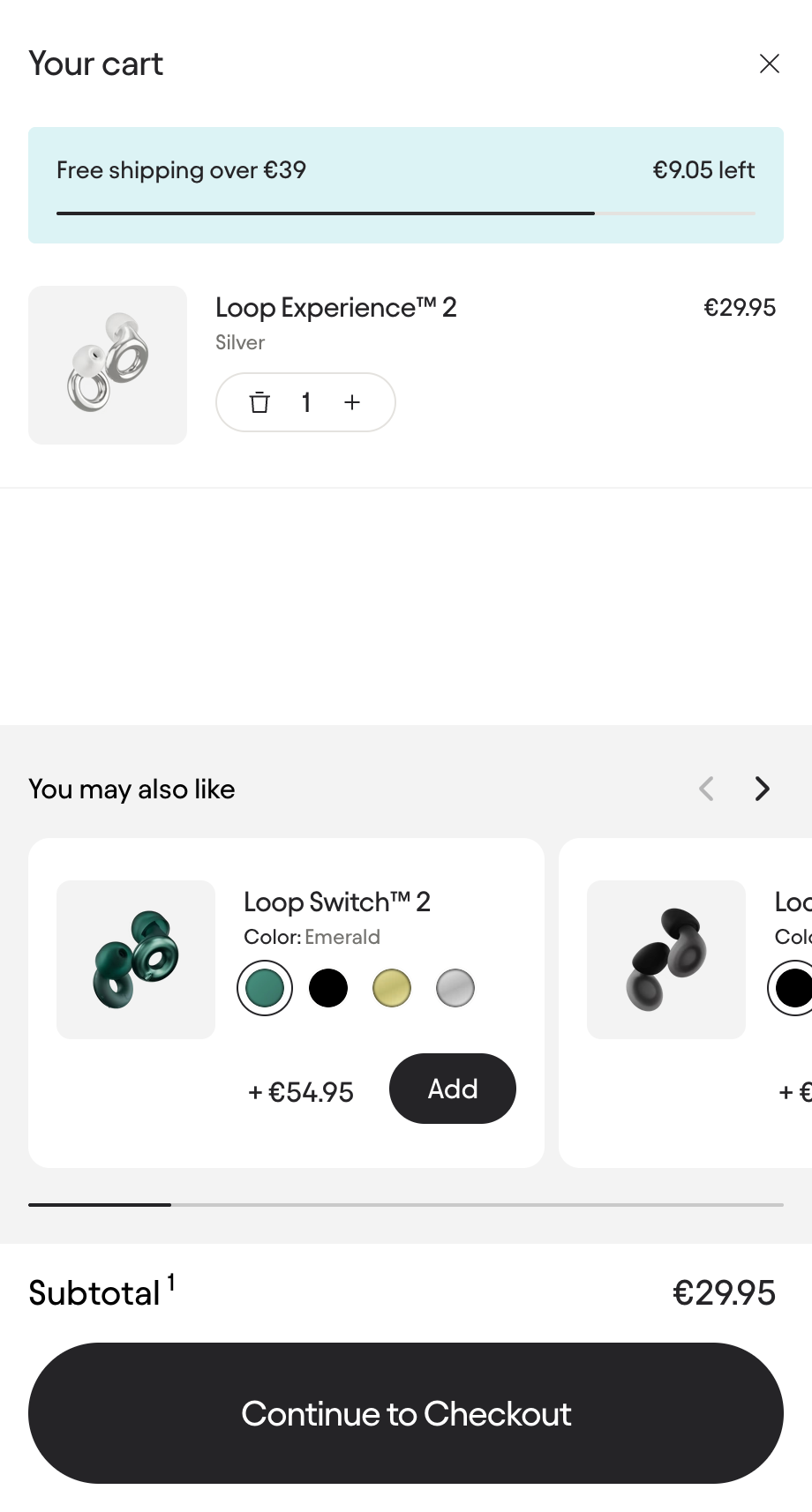
For example, if free shipping starts at $50 and a customer’s cart is at $45, they are far more likely to add another item than to abandon their cart. See how Loop Earplugs does it below:
So how can you promote free shipping thresholds effectively? Try
Adding banners on your homepage, product pages, and cart pages clearly communicating the threshold.
Using progress bars or messaging like, “You’re only $5 away from free shipping!” in the cart or at checkout.
Suggesting low-cost add-on product recommendations to help customers easily reach the threshold.
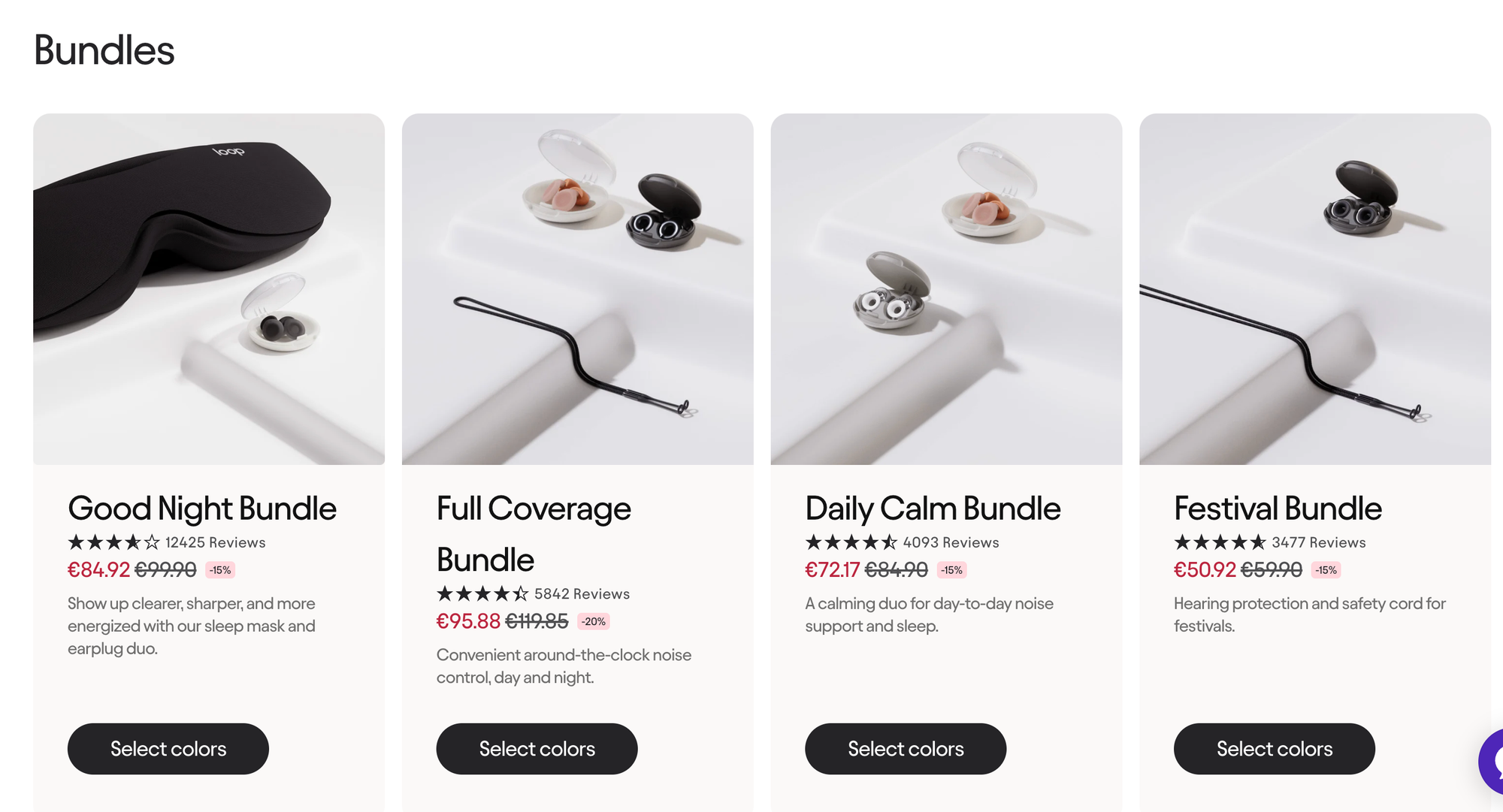
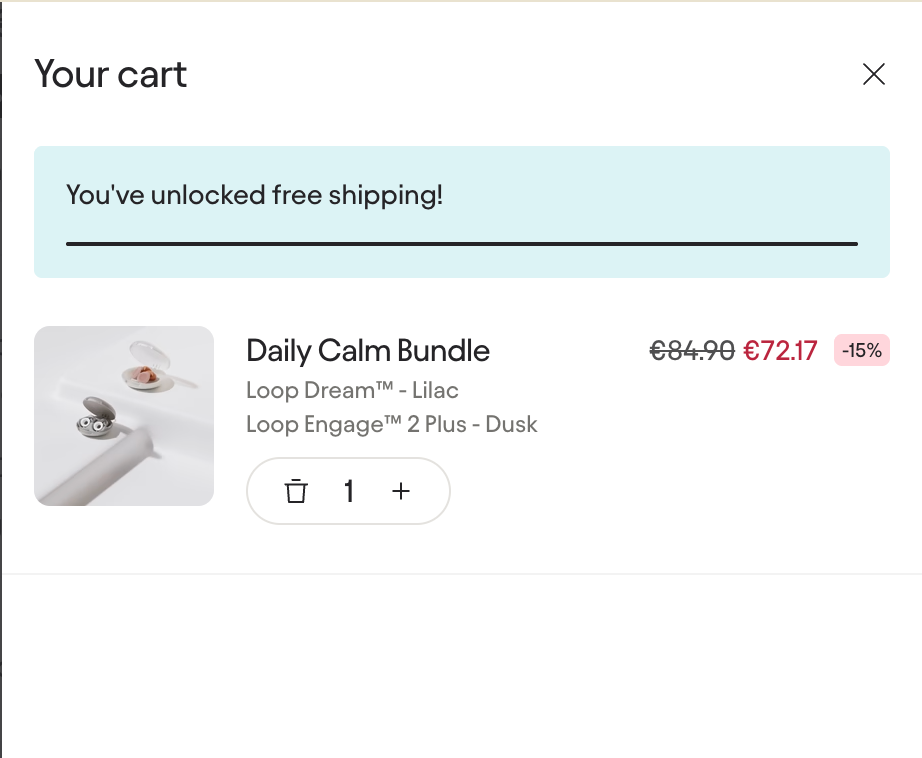
Bundles can also help customers hit the free shipping mark more quickly, further increasing their perceived value. You can see how all of
Loop's bundles are over the free shipping threshold, making it an easier choice for shoppers to select a bundle versus single item.
This strategy improves both AOV and conversion rates by making the incentive of free shipping feel like an achievable win for the customer.
3. Strategic upsells improve revenue per session
Upselling is an essential tactic for any brand focused on how to maximize AOV on Shopify. However, upsells need to feel helpful—not pushy.
Effective upselling focuses on relevance and timing. Here’s how to apply upsells strategically throughout the customer journey:
Pre-Purchase Upsells: Offer add-ons or complementary products while the customer is browsing. Example: If a customer is viewing a moisturizer, suggest a toner or serum that complements it.
Cart Page Upsells: Recommend low-cost, relevant items during the cart review stage. Example: Add a matching phone case when purchasing a smartphone. Glossier does this well:
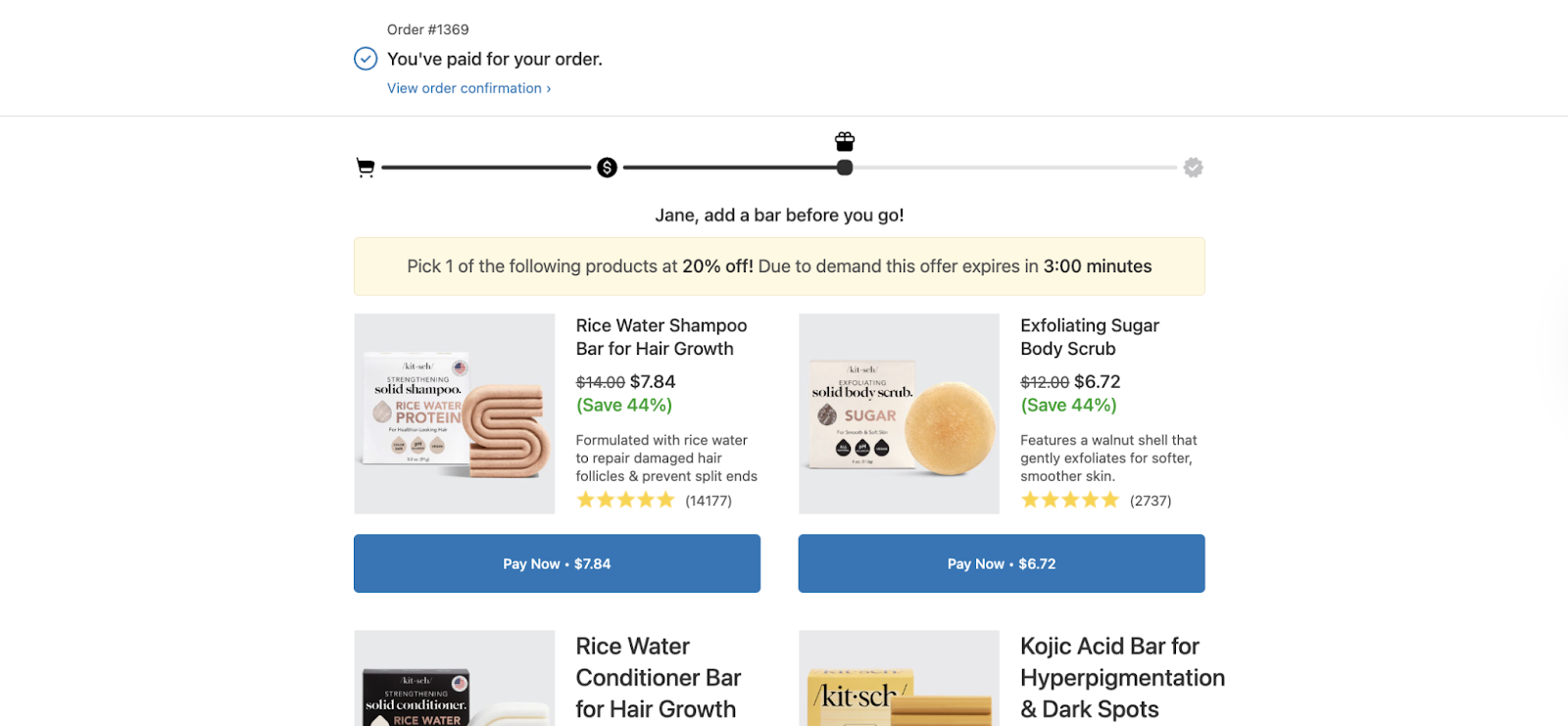
Post-Purchase Upsells: Present special offers immediately after checkout when the customer is already in a buying mindset. Example: Offer a discounted add-on, like an after-sun lotion following a sunscreen purchase.
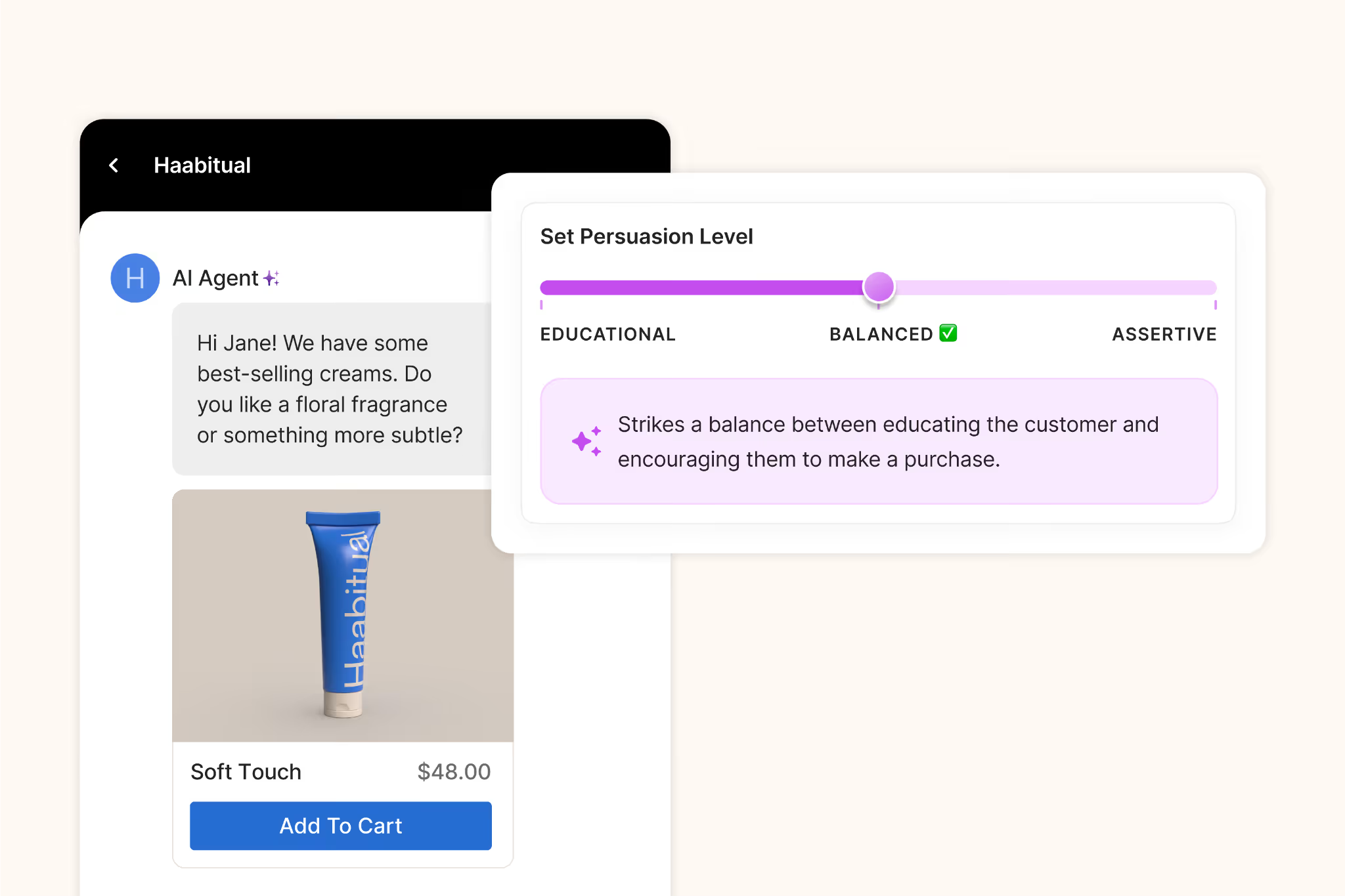
One approach that brands have used successfully is using live chat-based upselling. For example, customer service tools like Gorgias allow support teams to suggest products to customers based on browsing behavior, offering an upsell in a way that feels natural and supportive:
The most important rule: upsells should feel like they’re helping customers complete their order, not adding random pressure to buy more.
4. Tiered rewards encourage higher cart values
Encouraging customers to buy in larger quantities is a tried-and-true method for increasing average order value.
There are two primary approaches:
Tiered Discounts: Offer escalating savings based on quantity. Example:
Buy 2, Save 10%
Buy 3, Save 20%
Buy 5, Save 30%
Threshold-Based Rewards: Provide perks once a customer reaches a specific cart value. Example:
Spend $100 and receive a free gift.
Spend $150 and save 20% on your order.
Womads did this during Black Friday, showcasing the tiered discounts in its email campaigns:
Pair this with a loyalty program to reward existing customers for larger purchases and repeat purchases. This increases customer satisfaction, encourages new customers to spend more on their first purchase, and boosts customer lifetime value.
For consumable or repeat-purchase products (like supplements, skincare, or packaged foods), highlight the practical benefits of buying in bulk, such as reduced shipping costs or longer-lasting supply.
Creating a dedicated "Stock Up and Save" section on your Shopify store can make it even easier for customers to find and take advantage of larger purchase incentives. Check out this example from Innosupps!
AI personalization is changing how brands increase AOV
For years, increasing AOV relied heavily on static merchandising tactics: fixed bundles, generic upsells, and broad discount campaigns.
That’s changing quickly.
Today, more ecommerce brands are using AI-powered personalization to increase revenue per customer without relying on aggressive discounts.
Instead of showing every shopper the same offer, AI tools can now tailor product recommendations, bundles, upsells, and merchandising experiences based on browsing behavior, purchase history, cart value, and customer preferences.
This shift matters because personalization increases perceived relevance—and relevance increases conversion rates and cart sizes.
AI-powered recommendations are becoming smarter
Modern recommendation engines can identify purchasing patterns that would be difficult to spot manually.
For example, instead of recommending the same “best sellers” to every customer, AI systems can dynamically suggest:
complementary products
replenishment items
higher-margin add-ons
personalized bundles
frequently bought together combinations
This creates a more curated shopping experience while increasing Average Order Value organically.
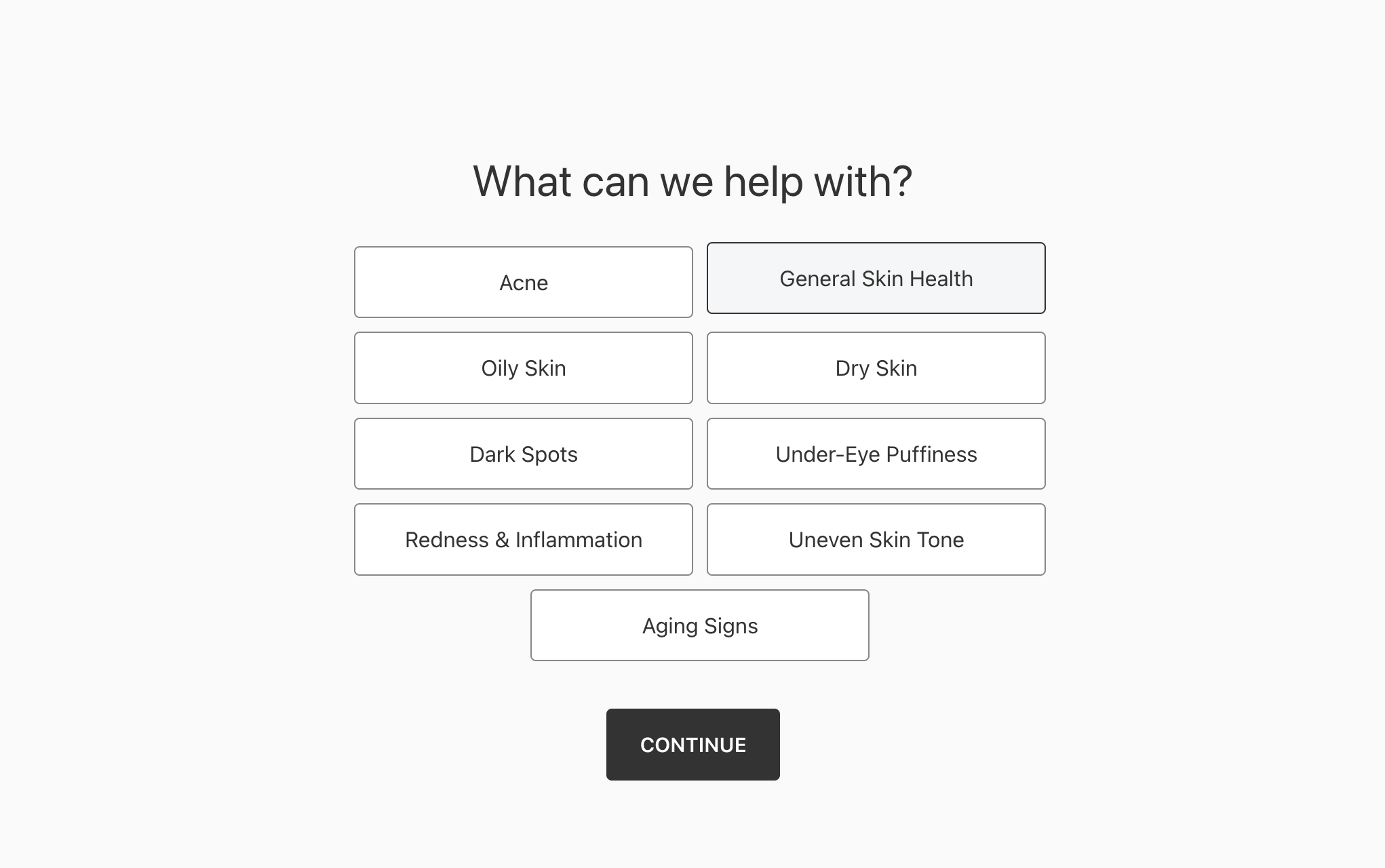
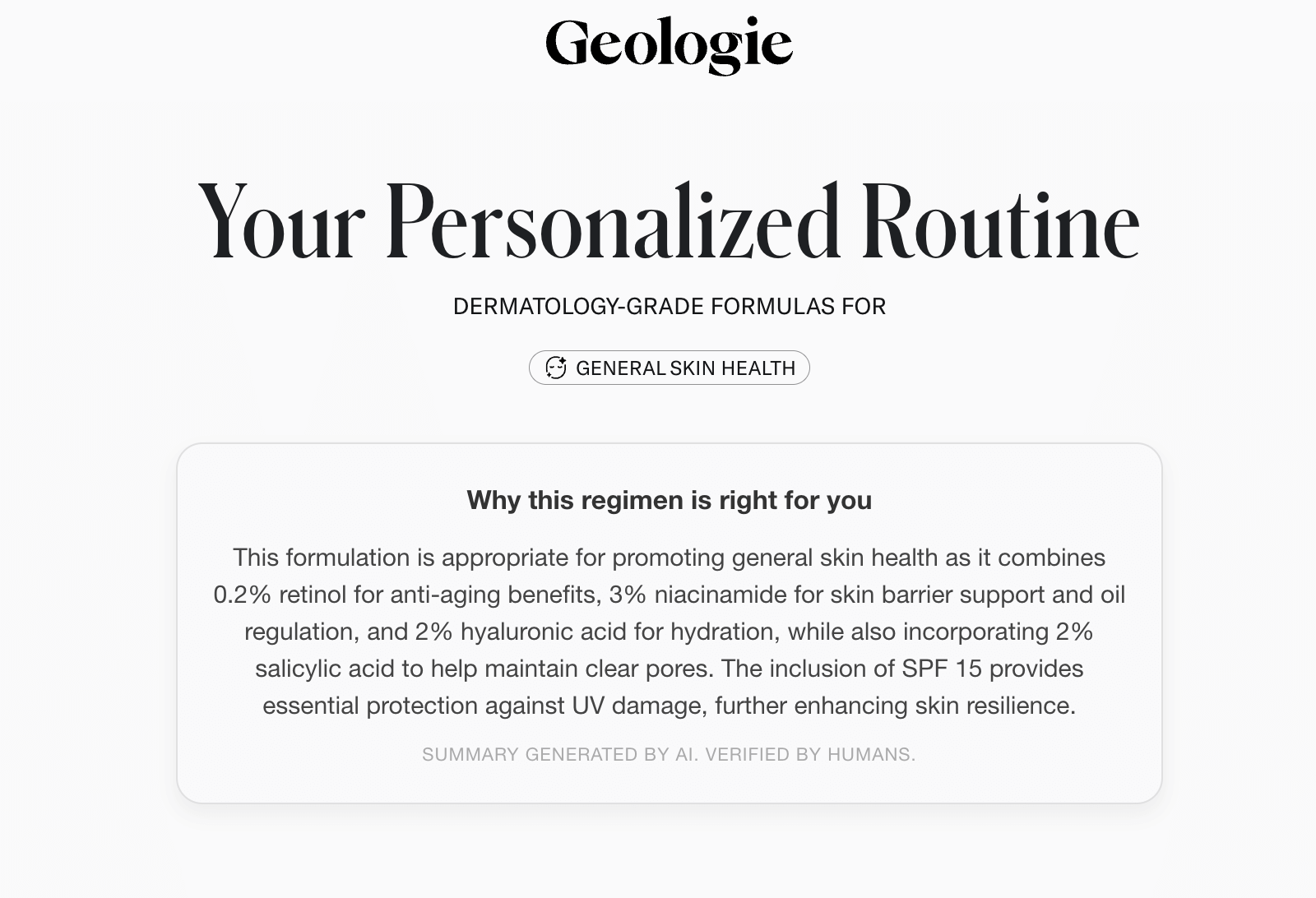
For example, many supplement, wellness, and beauty brands now use AI-powered quizzes to recommend customized product routines based on customer goals, lifestyle, and preferences.
AI helps brands protect margins while increasing revenue
One of the biggest advantages of AI personalization is that it shifts the focus away from price competition.
Instead of asking:
“How much should we discount?”
Brands can ask:
“How can we make this purchase more valuable for this specific customer?”
As acquisition costs continue rising across paid channels, many ecommerce brands are realizing that sustainable growth depends on maximizing revenue per visitor—not simply driving more traffic or offering deeper promotions.
AI-powered merchandising helps brands:
increase revenue per session
improve conversion rates
surface higher-margin products
reduce discount dependency
personalize customer journeys
and increase customer lifetime value
All while preserving brand equity.
The brands winning in 2026 won’t necessarily be the ones offering the biggest discounts. They’ll be the ones delivering the smartest shopping experiences.
Margin protection matters more than ever
Rising acquisition costs, increasing competition, higher fulfillment expenses, and changing consumer expectations are putting enormous pressure on margins across the ecommerce industry.
As a result, many Shopify merchants are rethinking the role discounts play in their growth strategy.
To summarize:
Thoughtful bundling improves customer experience and cart size.
Tiered rewards make larger purchases attractive and attainable.
By focusing on increasing AOV alongside conversion rates, you can create a more resilient, profitable business model—one that delights your customers while strengthening your bottom line.
If you want more tips on increasing AOV, you can grab our AOV ebook here. Packed with tips from experts in the Shopify space.
Frequently asked questions (FAQs)
How can I increase AOV without offering discounts?
Brands can increase Average Order Value (AOV) without discounts by using strategies like product bundling, upselling, personalized product recommendations, free shipping thresholds, subscriptions, and loyalty rewards. These tactics increase perceived value while protecting profit margins.
Is increasing AOV better than increasing traffic?
In many cases, yes. Increasing AOV improves revenue from existing traffic, which is often more cost-effective than acquiring new visitors through paid advertising. As customer acquisition costs continue rising, many ecommerce brands prioritize revenue per session and customer lifetime value alongside traffic growth.
What is a good AOV for Shopify stores?
A “good” AOV depends on the industry, product category, and pricing model. However, successful Shopify brands typically focus less on hitting a universal benchmark and more on consistently improving AOV over time while maintaining healthy margins and conversion rates.
How do luxury and premium brands increase AOV without discounts?
Premium brands often increase AOV through curated product bundles, personalized shopping experiences, exclusive collections, subscriptions, and high-end customer service. Instead of competing on price, they focus on increasing perceived value and strengthening brand positioning.
Are product bundles better than discounts?
In many cases, yes. Product bundles increase cart size while preserving margins more effectively than blanket discounts. Bundles also improve customer experience by helping shoppers discover complementary products and simplifying purchasing decisions.
How do upsells increase Average Order Value?
Upsells increase AOV by encouraging customers to add complementary or upgraded products to their purchase. Effective upsells feel helpful and relevant rather than overly promotional, especially when personalized based on browsing or purchase behavior.
How does AI personalization increase AOV?
AI personalization increases AOV by tailoring recommendations, bundles, upsells, and product discovery experiences to individual shoppers. Personalized shopping journeys improve relevance, increase conversion rates, and encourage customers to purchase more products without relying on discounts.
What strategies increase AOV the fastest?
Some of the fastest ways to increase AOV include:
product bundles
free shipping thresholds
cart upsells
post-purchase offers
subscriptions
and personalized product recommendations
The most effective strategy depends on the brand’s product category, customer behavior, and pricing model.
Why are ecommerce brands moving away from heavy discounts?
Many ecommerce brands are reducing their reliance on discounts because constant promotions weaken margins, reduce perceived value, and train customers to wait for sales. Instead, brands are increasingly focused on sustainable growth strategies that improve profitability and customer lifetime value.
Build a bundle in under 5 minutes
Over 25,000 Shopify merchants use Simple Bundles to sell more per order.
Off-road and overlanding customers are buying complete upgrades for their rigs. This article explains why kit-based selling dramatically increases AOV for Shopify stores by packaging compatible components into pre-built kits or bundles.
Why bundles are a better way to sell fitment-based kits: merchants can create clean, platform-specific product pages while tracking shared components like lights, brackets, and harnesses at the inventory level.