


The 5 Best Shopify Dropshipping Apps to Use in 2026
Modern dropshipping apps have evolved far beyond simple product imports.

Ashley R. Cummings
Jan 19, 2026 · 8 min
There are dozens of touchpoints across the customer journey where an upgrade is natural and welcome.

Ashley R. Cummings
Jan 19, 2026 · 8 min
Ashley is a writer focused on SaaS, ecommerce, and the creator economy, helping brands turn complex ideas into clear, actionable content and sharing practical guidance to help merchants grow.
What’s better for ecommerce brands than making a sale? That’s right! It’s making a little bit (or a lot) more on every sale.
Upselling is a sales tactic that turns a $35 order into a $45 order by helping customers choose a better version of what they already want. It’s the digital equivalent of “Want to super-size that?” Ultimately, you’re offering customers a bigger, more premium, or more complete version of what they already wanted.
A successful upselling strategy doesn’t just increase average order value (AOV). It strengthens customer relationships, improves the customer experience, and drives long-term customer lifetime value.
These small upsells add value for your customers and compound over time to boost revenue, making a huge difference in your ecommerce store's overall revenue.
This article will cover the different upsell opportunities, cross-selling moments, and upsell offers for ecommerce and retail brands and help you turn everyday purchases into higher-value orders.
Upselling is a sales technique that encourages customers to upgrade or buy a higher-priced or premium version of the same product they’re buying.
For example, I recently purchased a Redken All Soft Conditioner and then went straight to my online shopping cart. When I got to my cart, Redken’s ecommerce store automatically asked me if I needed a bigger bottle of the more intense “Extreme Conditioner.”
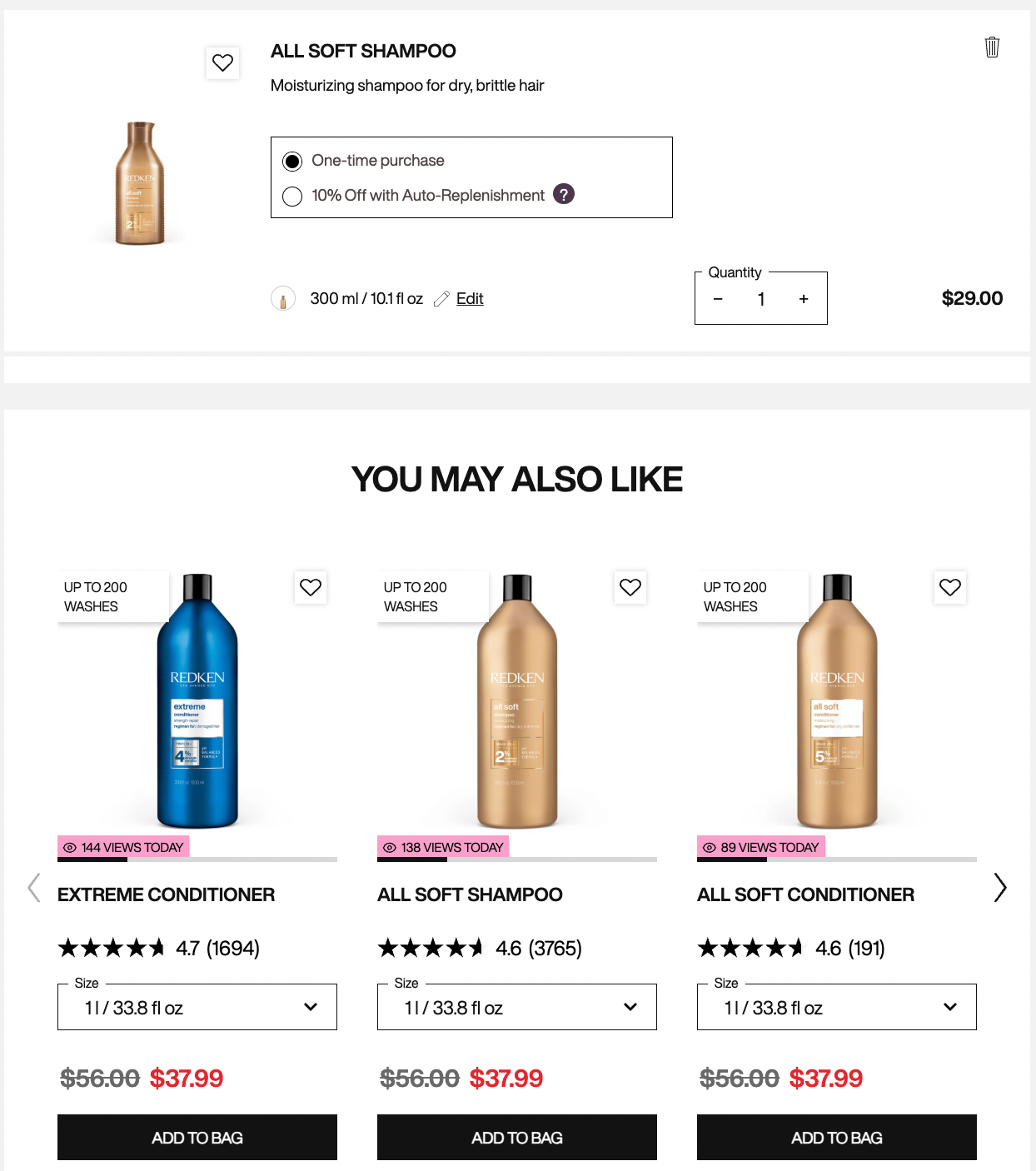
That’s an example of an upsell. The goal of an upsell is to boost a customer’s average order value by increasing the price they pay.
And, you know what? I indeed opted for the Extreme Conditioner, because (somehow) Redken understands my customer needs, knows I live in a dry climate and my hair is straw, and identified a clear pain point in my hair care routine.
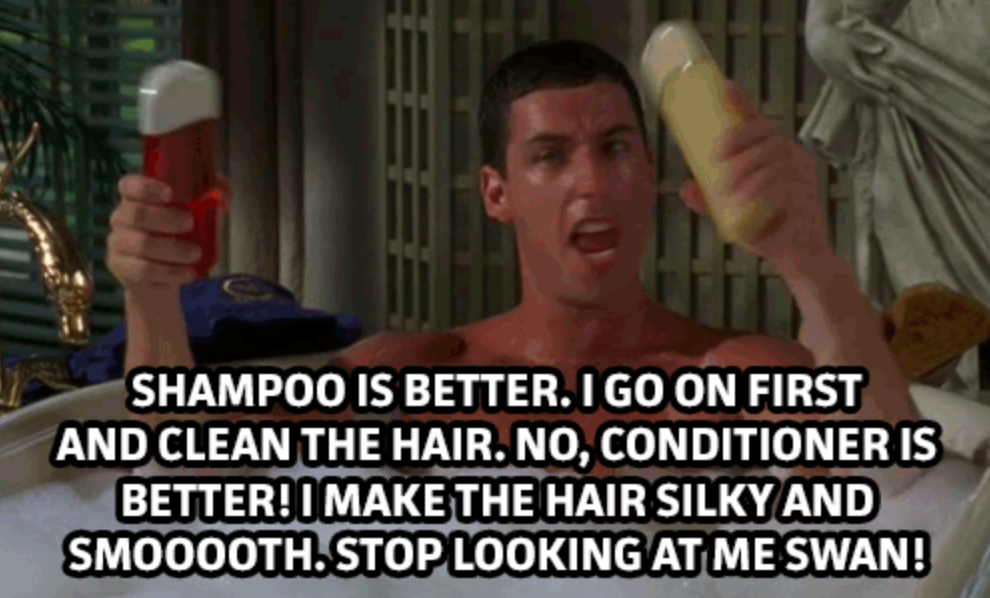
You’ll also notice that Redken suggested I get the All Soft Shampoo. This is an example of cross-selling, or recommending a complementary product. Conditioner is not a deluxe version of shampoo. It’s a completely different product. Despite what Billy Madison says, they’re not competing products—they go together perfectly.
Both upselling and cross-selling play a role in increasing conversion rates, but upselling is specifically about helping customers choose the best version of what they already want.
Most of us think of upselling as a little suggestion that pops up after adding something to the cart. And yes, those moments matter. But they’re just the tip of the iceberg.
In reality, there are dozens of touchpoints across the customer journey where an upgrade is natural and welcome. What matters is spotting the moments when customers are already making decisions, and using them to point toward a better version of what they want.
Strategic upselling:
The key is identifying moments where customers are already making decisions — and guiding them toward better outcomes.
Here are the most common places for upsells and how you can use each one effectively:
Before I get into specific examples, the Simple Bundles YouTube channel has a ton of upselling tips for increasing AOV. Here’s a good starting point:
Now that we’ve covered common upselling opportunities, let’s look at seven types of upsells with some concrete upselling examples.
Complete the set product bundles let you upsell shoppers from a single item to a more complete, higher-value version of what they already want. Instead of selling “just the shampoo,” you offer the full hair care routine.
Bundling works because it:
A great real-world example comes from Brooklinen. Rather than selling sheets, pillowcases, and duvet covers separately, they offer bundles that include “everything you need for a bed” in one click. It’s convenient for the shopper (“I don’t have to figure this out”) and powerful for the brand (one product page, higher order value, and fewer abandoned carts).
Here’s what this particular upsell looks like on the Brooklinen site:
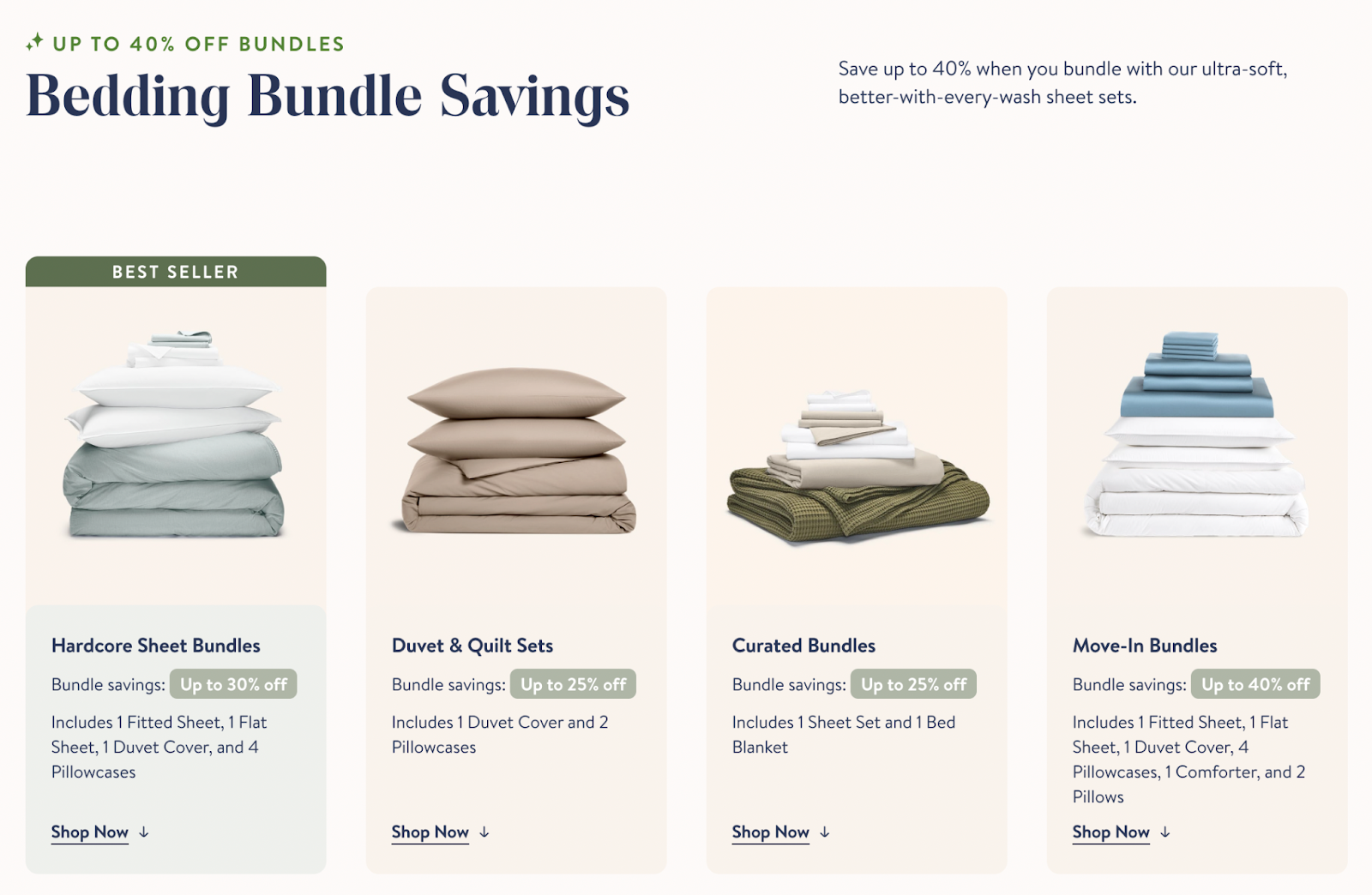
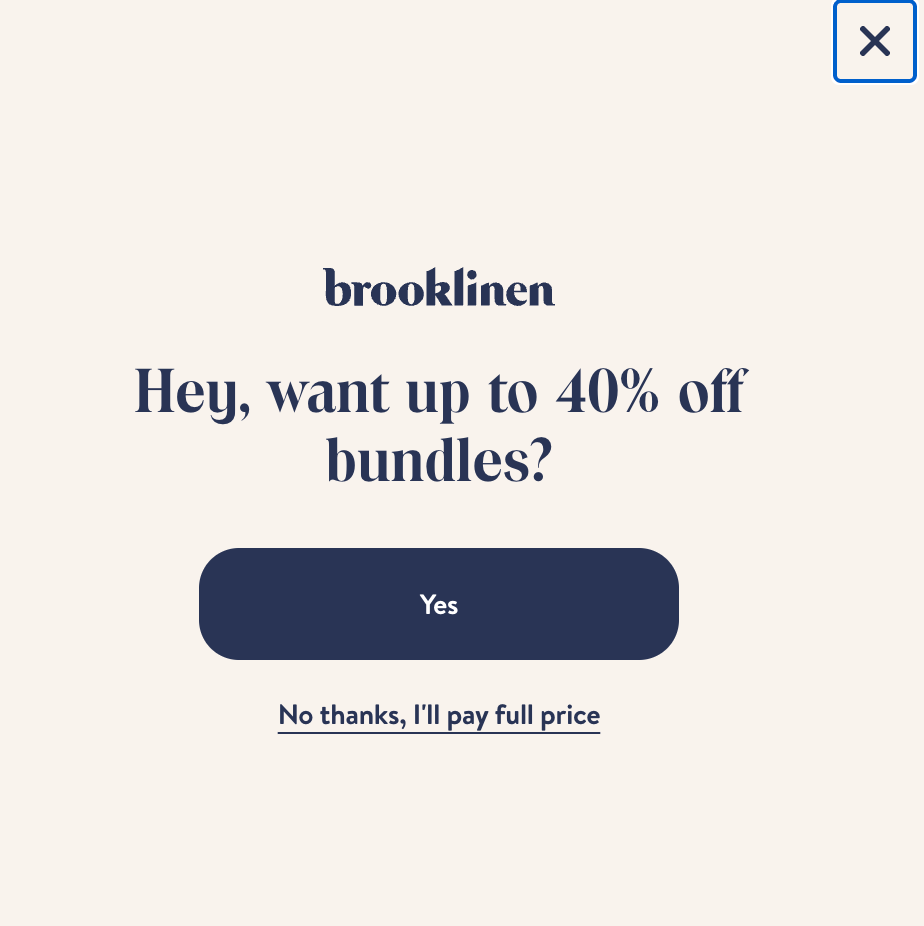
What’s more, when you first enter their site, they’ll sweeten the bundle deal by offering up to a 40% discount:
Finally, you’ll notice they make it even easier for consumers by telling us which product bundle is the best seller:
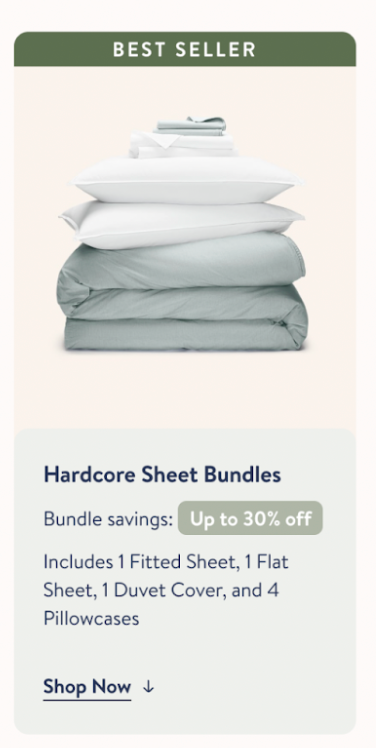
This is one kind of bundle. There are several other ways to bundle products (using both upselling and cross-selling techniques). And don’t forget, Simple Bundles makes it easy for you to create bundles on Shopify.
Tiered pricing guides customers toward higher-priced options based on functionality or scale — like size, storage, or performance. The customer isn’t changing what they’re buying. They’re choosing the upgraded version that better fits their needs.
Apple’s iPhone flow is a perfect example. Add a standard iPhone to your cart, and they immediately show up storage upgrade options like 256GB, 512GB, or 1TB. Each step is framed around real benefits, such as more space for photos, longer battery life, etc.
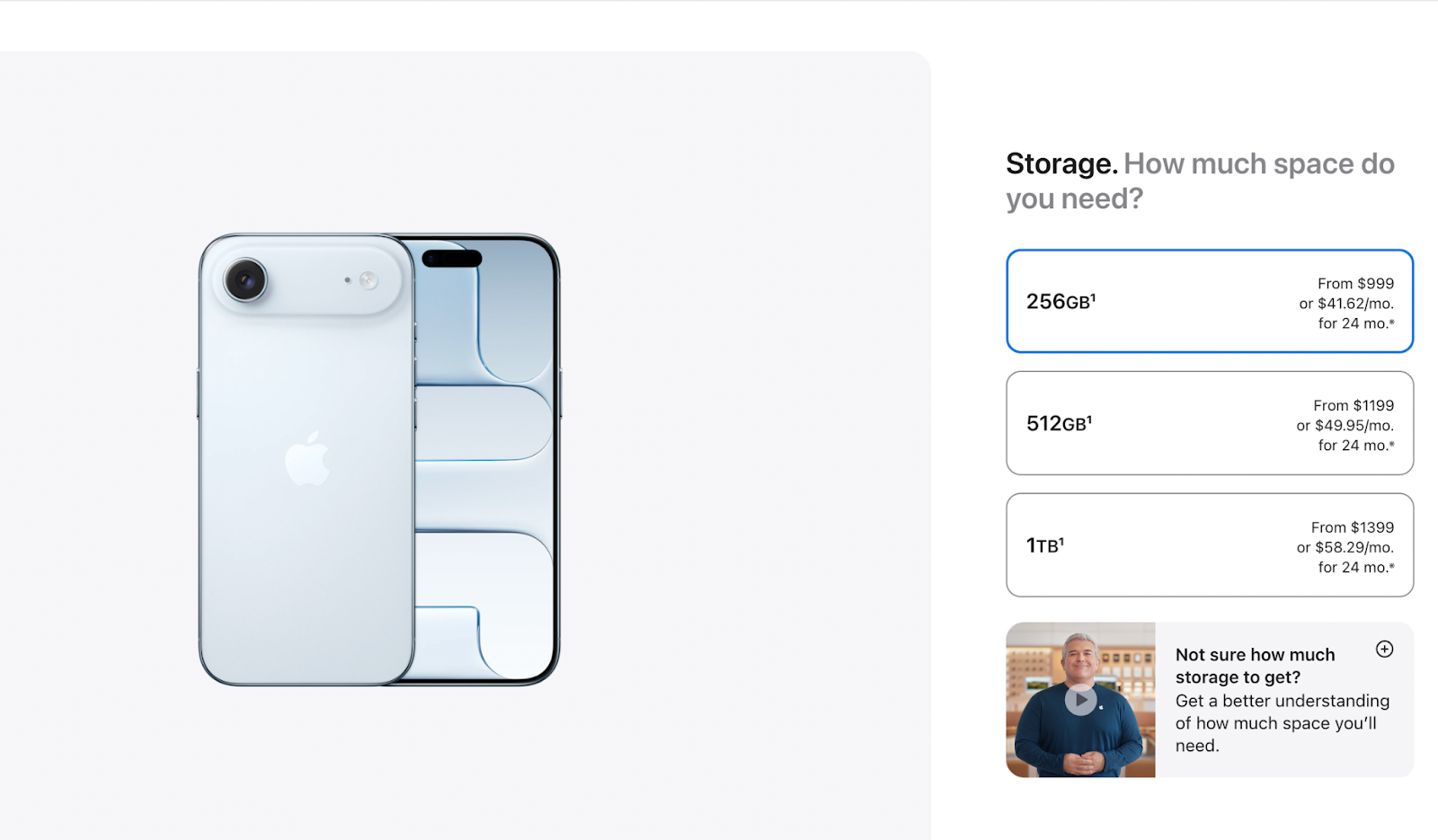
With this type of upsell, you ensure the customer gets the best version of your product for their needs.
While tiered upgrades focus on configuration (like more storage or a bigger size), value-add upgrades shift the customer to a better version of the same product, or one that delivers a meaningfully improved experience.
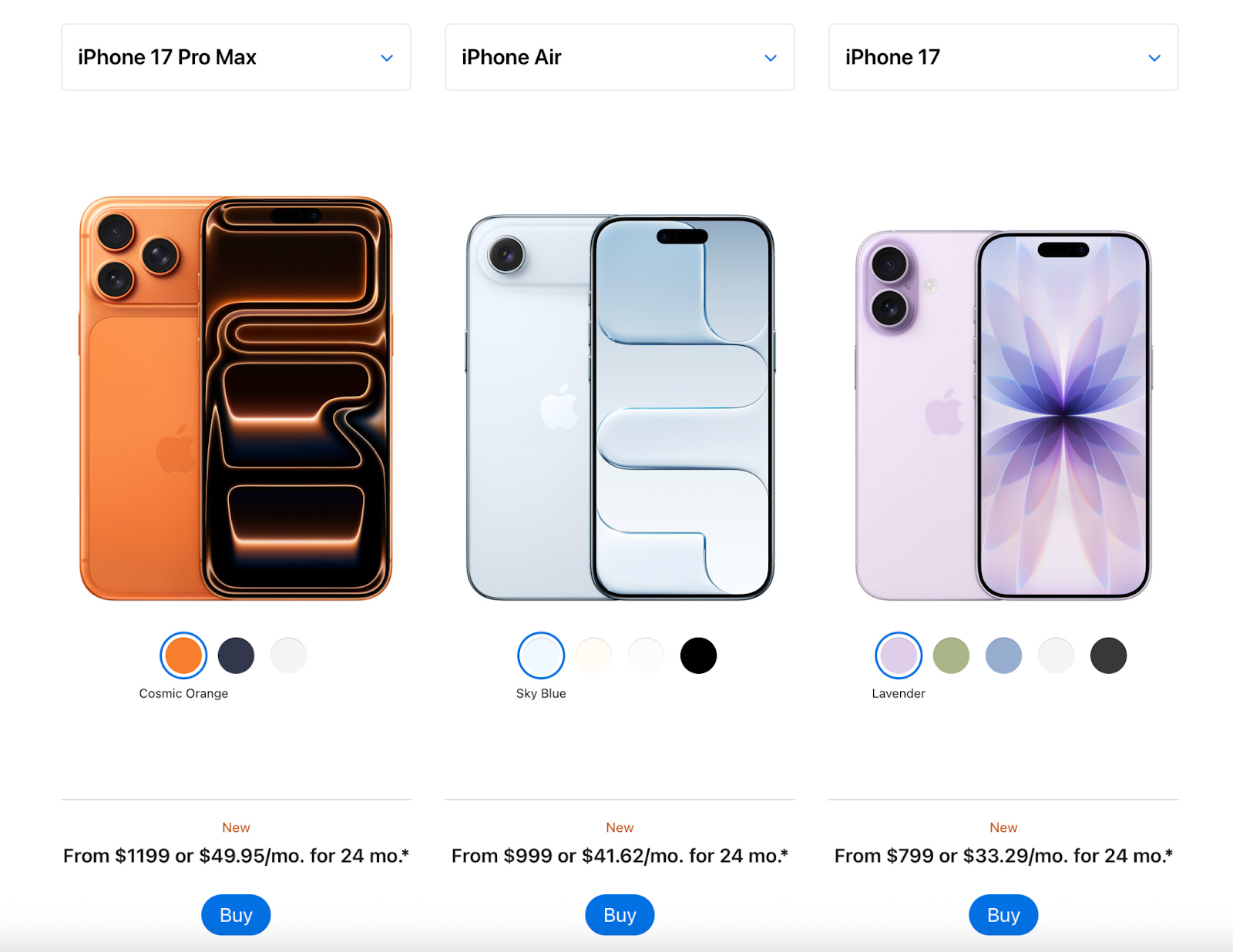
Let’s stick with the Apple example. A shopper might start with a standard iPhone, then see the option to upgrade to an iPhone Pro. With an iPhone Pro, you can sell better features like “better camera, a brighter display, and faster performance.
This type of upsell matches your customers up with the best version of your product (and cooler features).
Post-add-to-cart upgrades appear after a shopper has committed to a product but before checkout. This is prime upsell real estate. The customer has already made a decision—now you’re helping them make a better one.
Away is a good example of post-add-to-card add-ons. You may add a standard carry-on to your cart, and then you may be prompted to upgrade to The Bigger Carry-On, add a lifetime protection plan, or personalize it.
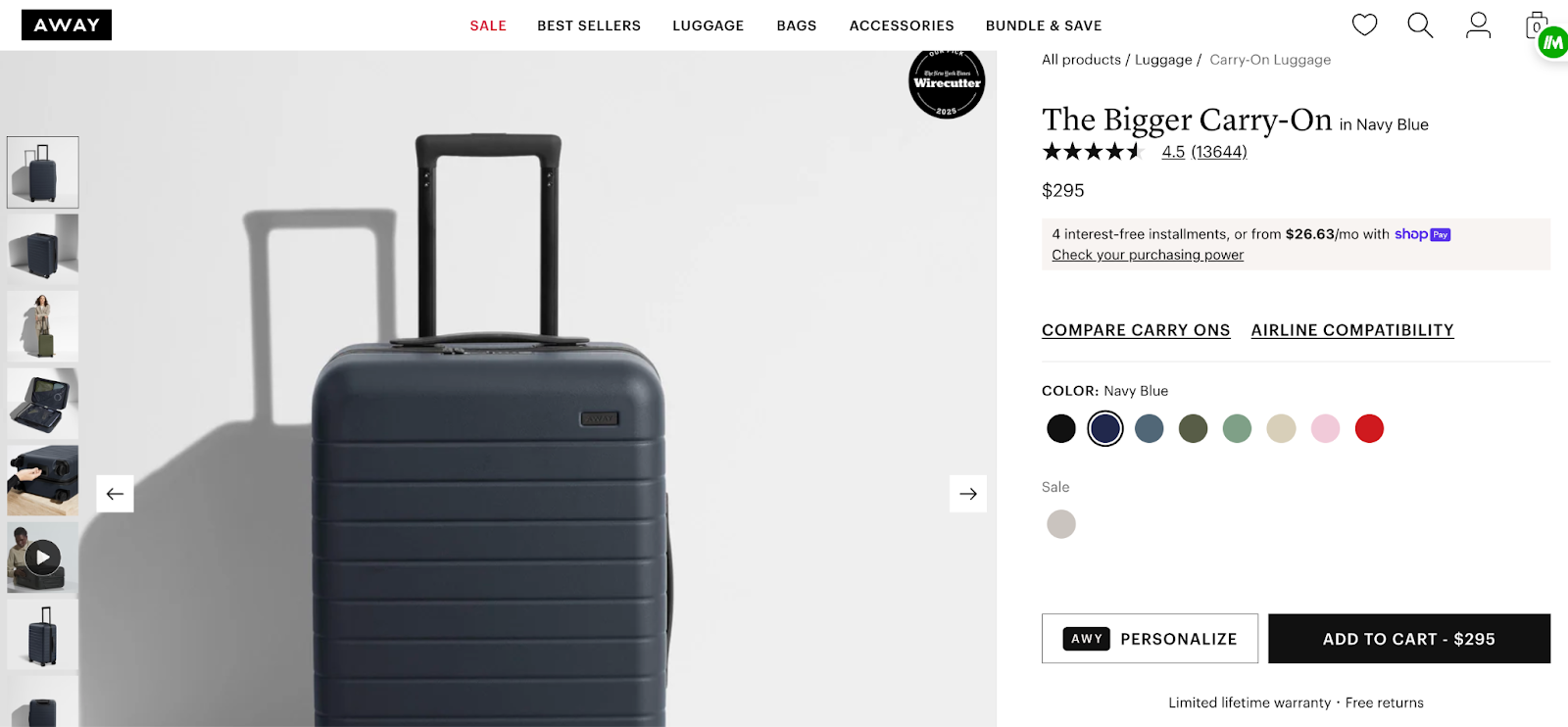
Each option keeps the core product the same while increasing its value. This upsell strategy is awesome because it reframes spending more as getting more.
Multi-pack offers upsell customers by rewarding them for buying more of the same thing. Instead of selling a single unit, you encourage shoppers to upgrade to a 2-pack, 3-pack, or a bulk option with a clear value incentive. Again, the product doesn’t change, but the scale does.
MeUndies is the perfect example. When you shop for underwear, you can buy a single pair… or a multi-pack (a bundle). The math maths: the more you buy, the more you save.
Here’s an example of what the MeUndies V-Day bundle looks like:
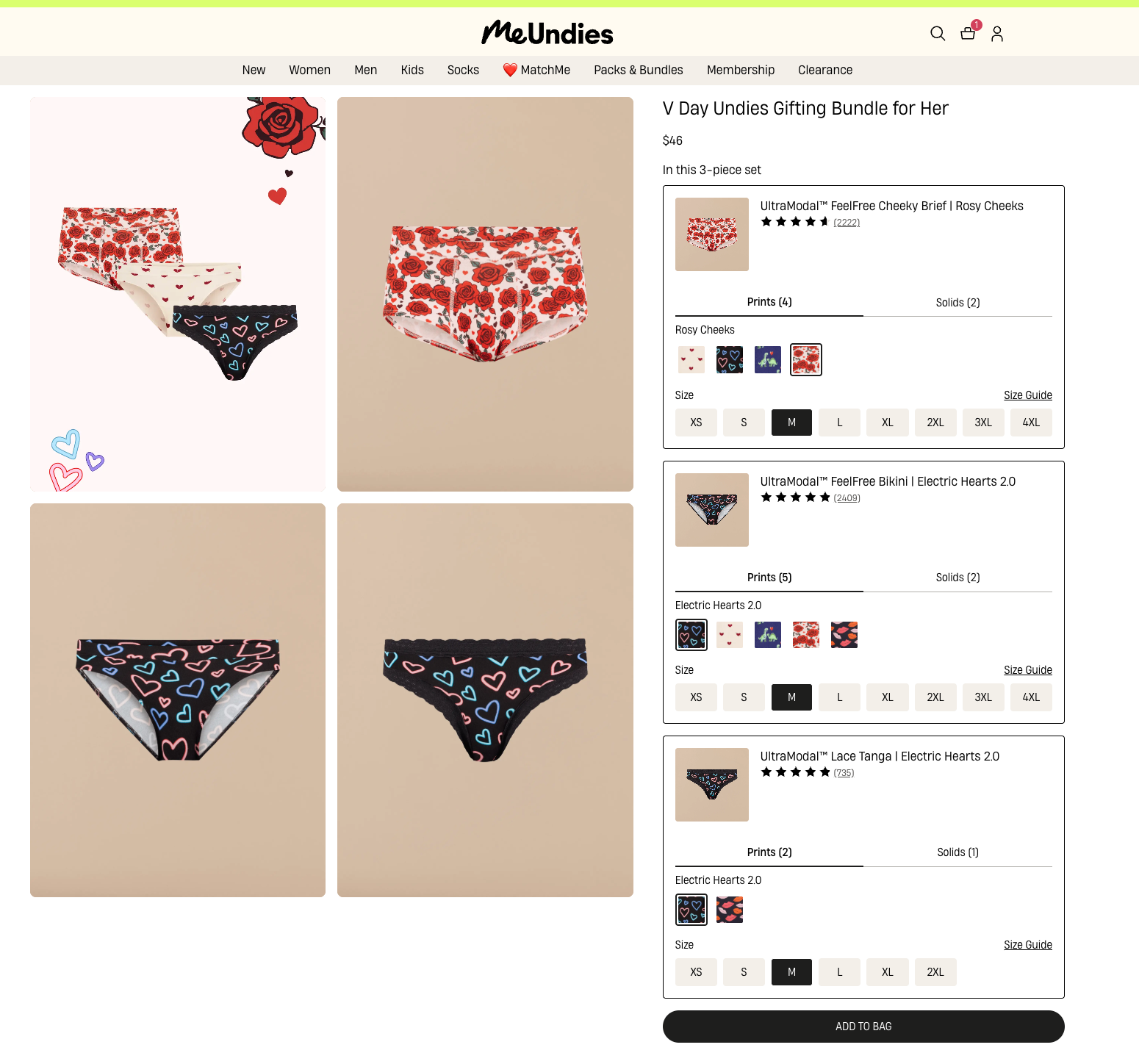
You’ll notice you can mix and match (or even buy the same pattern if you want).
You’ll notice you can mix and match (or even buy the same pattern if you want). This strategy is especially powerful for building retention with loyal customers.
Add-on services upsell by enhancing the purchase with convenience, care, or experience. The product stays the same, but the way it’s delivered gets better. These offers work because they save time, remove friction, or make the purchase feel more special.
The classic example? Gift wrapping. Many ecommerce brands offer it right before checkout: “Add gift wrapping for $5.” Here’s how Aesop does it:
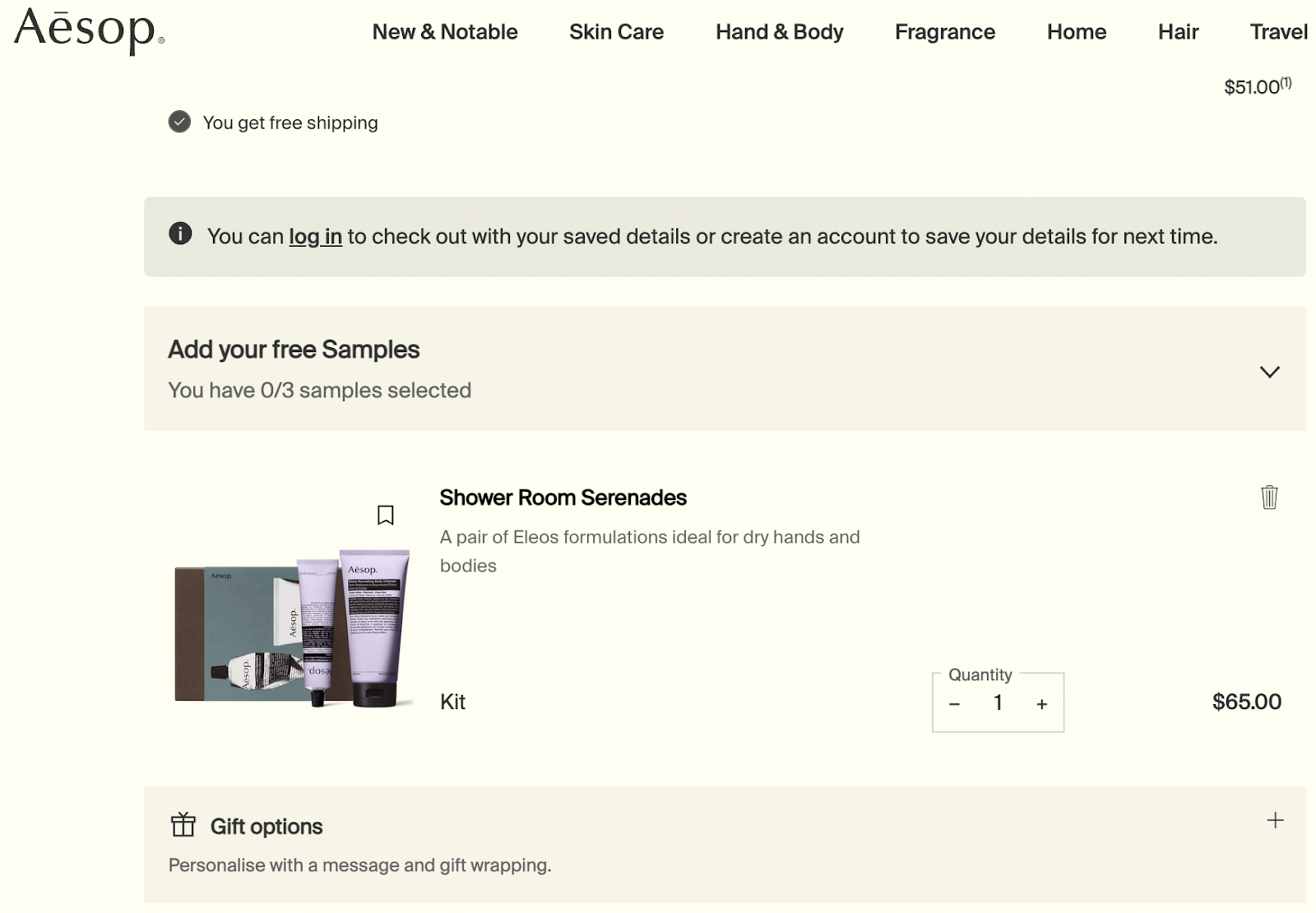
It’s awesome because it turns your order into a ready-to-give present. The added bonus? For only $5(ish), the shopper doesn’t have to hunt for (or buy) wrapping paper, tape, or a card.
BOGO offers upsell by turning a single-item purchase into a multi-item order with irresistible value. “Buy one, get one free” or “Buy one, get one 50% off” moves the thought process from “Should I spend more?” to “Why wouldn’t I?”
Skincare and supplement brands use this upsell tactic constantly. Add one bottle of vitamins to your cart, and you’ll see: “Buy 1, get 1 free. Today only.” You’ll even see this at larger retailers, like Target:
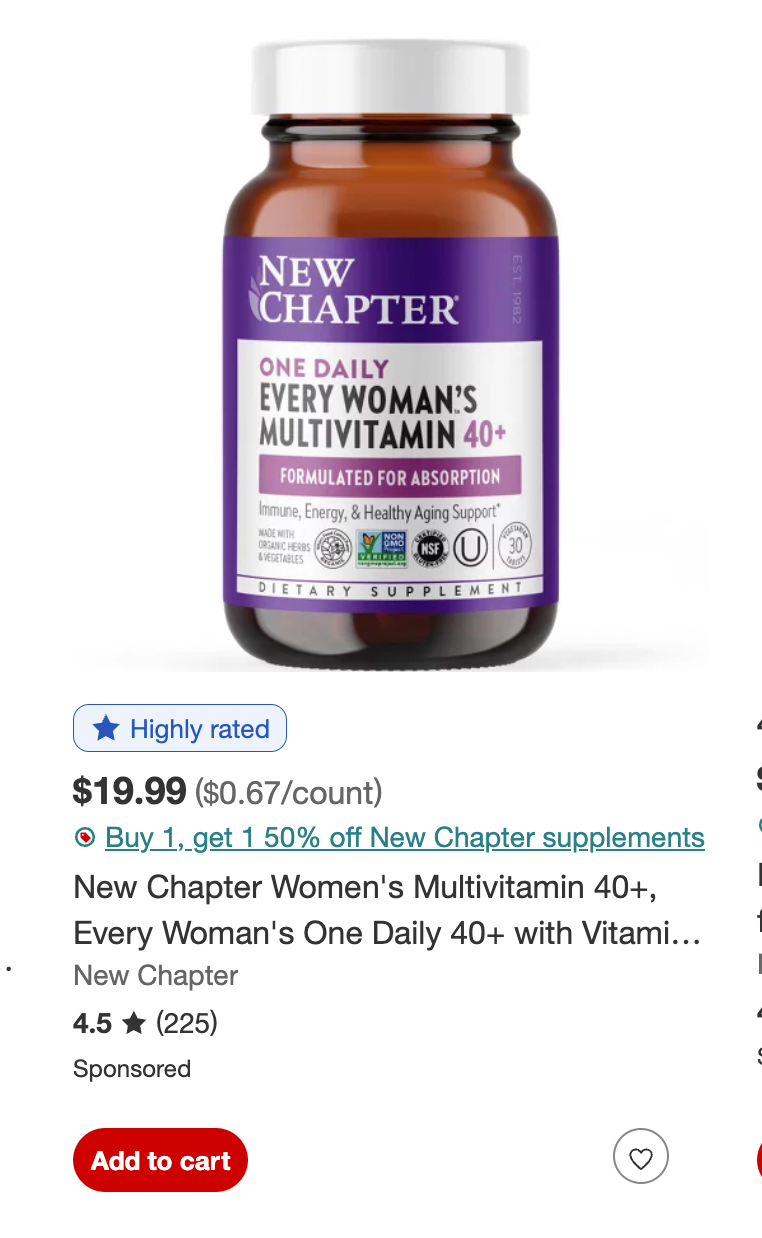
This type of upsell is highly strategic for products that customers buy regularly. The shopper most likely won’t sit there debating a $19.99 purchase. They’ll be thinking about getting two months’ worth for a lower price.
This limited-time upsell tactic works especially well for consumables like skincare and supplements. It accelerates purchasing milestones and increases customer lifetime value.
There are many ways to add upsell opportunities to your ecommerce site. But you don’t have to overhaul your entire website tonight.
Start small and make it measurable. Pick one upsell surface where you already have high intent (e.g., cart, checkout, or post-add-to-cart) and pair it with one upsell type that fits what you sell.
If you’re starting with a product bundle (a great place to start), pick your highest-volume product. Then build the “complete the set” version of it. Think shampoo → shampoo + conditioner. Sheets → sheets + pillowcases. The goal is to make the bundle the easiest choice on the page.
From there:
From there, expand into tiered upgrades, add-ons, and automated follow-ups using your CRM and customer feedback.
And if you’re building bundles on Shopify, Simple Bundles is built for this. You can start with a bundle, then expand into other bundle types as you go.
Modern dropshipping apps have evolved far beyond simple product imports.
The bundle relationships exist. Now your external systems can finally see them.
Instead of one bundle-wide price or percentage discount, every product can have its own adjusted price.

