
Simple Bundles vs. Kaching Bundles: Which Is Best for Shopify Bundles?
Both tools allow merchants to sell bundles on Shopify. But they are built on different architectural philosophies and operational tradeoffs, and that difference becomes more important as your store grows.
Evaluating a Kaching Bundles alternative, or trying to understand the difference between Kaching and Simple Bundles?

Simple Bundles
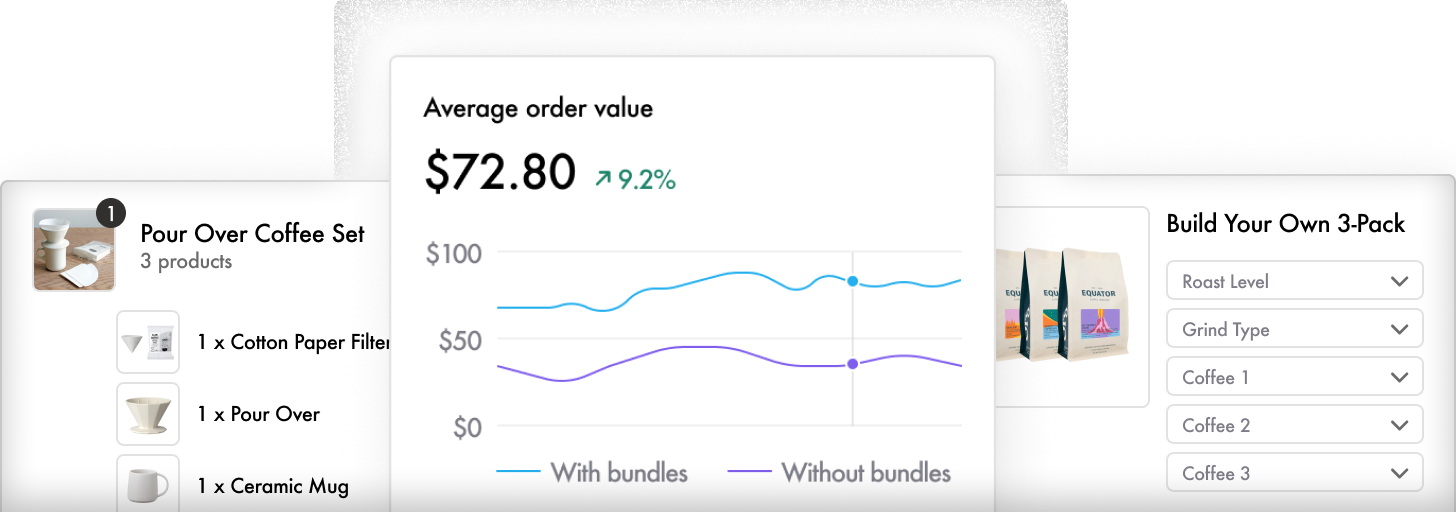
Simple Bundles is designed for brands that want beautiful, fully customizable bundle experiences such as mix-and-match, BOGO, free gift with purchase, subscription bundles, and more, all without sacrificing inventory accuracy, fulfillment reliability, or Shopify-native behavior.

Kaching Bundles
Kaching Bundles (often marketed as Kaching Bundle Quantity Breaks) is a flexible discount and bundle app that helps merchants boost average order value with volume discounts, tiered pricing, "Buy X Get Y Free" deals, mix-and-match offers, and related upsells.
Two bundle architectures and why the difference matters later
Most Shopify bundle apps fall into one of two architectural categories.
1. Frontend-first (builder-oriented) bundles
Kaching Bundles largely follows this model.
It uses storefront widgets to present quantity breaks, Buy X Get Y offers, and bundle upsells directly on the product page. Customers interact with these bundle offers visually, and the cart reflects the individual component products with discount logic applied.
Strengths
- Strong for quantity breaks and volume discounts
- Built-in BXGY (Buy X Get Y) and upsell logic
- Customizable widget layouts with styling controls
- Fast setup for promotion-focused stores
- Includes analytics and A/B testing capabilities
Tradeoffs
- Bundles are primarily pricing logic applied to products rather than standalone Shopify bundle SKUs
- Storefront-widget insertion can introduce theme or "Buy Now" button edge cases
- Reporting reflects discounted component items rather than unified bundle products
- POS and non-Online Store channels may require validation depending on workflow
- As bundles become permanent catalog items, promotional architecture can create operational complexity
For stores that are online-only and promotion-focused, this works well. But limitations emerge as operational complexity increases.
2. Product-native (system-oriented) bundles
This approach creates real Shopify products tied directly to component SKUs.
Simple Bundles follows this model.
Strengths
- Accurate inventory tracking at the SKU level
- Clean fulfillment and reporting
- Works across Shopify checkout, POS, subscriptions, and integrations
- Designed for 3PL, ERP, and high-order-volume environments
Tradeoffs
- Less "out-of-the-box" visual templates
- Frontend presentation is handled through themes (not pre-designed builder widgets)
The architecture is less flashy, but more scalable.
Simple Bundles vs. Kaching Bundles: feature comparison
| Feature | Simple Bundles | Kaching Bundles |
|---|---|---|
| Bundle types supported | Fixed bundles, mix & match, build-your-own, BOGO, volume bundles, free gifts, subscription bundles | Mix-and-match bundles, volume/quantity discounts, BOGO offers, tiered pricing, free gifts via discount settings |
| Visual approach | Theme-native (fully customizable) | App-embedded widgets and customizable layouts |
| Frontend customization | ✅ Full control via theme & dev | ⚠️ Customizable within widget & settings |
| Inventory sync accuracy | ✅ SKU-level automatic sync | ⚠️ Inventory tracks components; bundles often exist as discount overlays |
| Bundle treated as real Shopify product | ✅ Yes | ❌ No |
| Checkout compatibility | ✅ Native Shopify checkout | ✅ Native Shopify checkout with automatically applied deals |
| Shopify POS compatibility | ✅ Yes | ⚠️ Component products sell via POS; bundle widget logic may not translate identically |
| Subscription compatibility | ✅ Designed to work with subscription apps | ⚠️ Depends on how discount logic interacts with subscription purchase options |
| Cart Transform support | ✅ Yes | ⚠️ Depends on discount rule behavior |
| ERP / 3PL readiness | ✅ Built for operational clarity | ⚠️ Designed for AOV promotions; operational workflows may need validation |
| Pricing model | Free plan and paid tiers | Free to install; paid plans scale by additional revenue generated |
Where Kaching Bundles limitations appear over time
Many merchants launch with Kaching because of its:
- Quick setup for promotional bundles
- Flexible discount structures
- Built-in analytics and A/B testing
However, limitations tend to surface when bundles:
- Shift from promotions into permanent catalog products
- Require predictable back-end behavior (inventory, fulfillment, POS)
- Need omnichannel consistency across sales channels
- Promotion-first architecture becomes operationally complex
Kaching is designed to increase AOV through quantity breaks and BXGY logic.
But when bundles:
- Become permanent SKUs
- Need clean reporting as individual products
- Drive a significant percentage of revenue
Merchants often want bundles to behave like first-class catalog products, not dynamic discount overlays.
Draft orders and manual order creation limitations
Because Kaching bundles are primarily storefront-driven promotional configurations, recreating those exact bundle scenarios inside draft orders or admin-created orders can require manual adjustments.
For wholesale workflows, customer service teams, or sales-assisted orders, that can introduce operational friction.
Theme-level insertion can introduce edge cases
Kaching relies on product-page widgets to render bundle offers.
This means:
- Bundle logic depends on theme structure
- "Buy Now" button behavior can vary depending on offer type
- Page builders and custom layouts may require configuration
This is normal for widget-driven apps, but it's a reminder that your bundling UX is partially constrained by theme behavior.
How Simple Bundles approaches bundling differently
Simple Bundles' positioning is consistent: product-native, Shopify-first architecture focused on operational reliability.
Shopify-native bundles with real products + component SKUs
Simple Bundles emphasizes breaking bundles down into individual SKUs for order fulfillment and inventory sync, while supporting complex bundle catalogs.
When bundles become a major revenue driver, you want the entire ecosystem—inventory, fulfillment, analytics, integrations—to treat bundles as first-class citizens.
Theme-based presentation with full control
Instead of forcing a rigid frontend template, Simple Bundles leans into theme-native presentation and customization.
That matters if you want to:
- Design bundles as permanent PDPs (not just a widget)
- Match your brand UI exactly
- Evolve the experience without re-platforming your bundle logic
Scaling across POS, subscriptions, 3PLs, and higher order volume
Simple Bundles has support for Shopify POS, subscription apps, and positions itself for ERP/WMS/3PL readiness.
DIBS Beauty on why bundle architecture matters
DIBS Beauty is a useful example because their bundle experience needs to feel effortless for shoppers and stay clean operationally as SKUs and volume grow.
Simple Bundles published a case study on DIBS Beauty + 1r Agency focused on building a smooth mix-and-match experience. You can also see DIBS actively merchandises bundles/sets as a meaningful part of their catalog.
The key takeaway isn't "bundles increase AOV". It's: when bundles become a core shopping pathway, the backend model matters, including inventory, fulfillment, and reporting need to remain predictable even as the bundle catalog expands.
How to choose between Simple Bundles and Kaching Bundles
Here's a practical decision framework that maps to real merchant tradeoffs:
Choose Kaching Bundles if you prioritize…
- Promotions + quantity break UX on the Online Store
- A/B testing and built-in performance analytics
- BXGY and upsell-style pricing incentives
- Fast deployment without creating new bundle products
Choose Simple Bundles if you prioritize…
- Permanent bundled products that need to behave like "real products"
- Accurate inventory + clean fulfillment tied to component SKUs
- Confidence you can scale into POS, subscriptions, multi-location, 3PL/WMS without rethinking your bundle stack
Why merchants switch from Kaching Bundles to Simple Bundles
Most switches aren't caused by dissatisfaction with Kaching's promotion engine. Common triggers:
- Bundles evolve beyond discounts — When bundles move from "AOV lever" to "core product strategy," merchants often want dedicated bundle SKUs and reporting clarity.
- Subscription launches — Discount logic layered on top of subscription pricing can create edge cases. Merchants prefer bundle structures designed to integrate cleanly with subscription apps.
- POS and omnichannel expansion — As brands expand into retail or pop-ups, they often want bundles to behave consistently across sales channels.
- Ops maturity (3PL/WMS, multi-location, reporting) — When bundles drive serious revenue, operational predictability becomes more important than promotional flexibility.
Final verdict: which is best?
If you want a flexible, promotion-centric tool to boost AOV with volume discounts, BOGO, and tiered bundle deals, Kaching Bundles is a strong choice.
If you're building bundles as long-term catalog products — and you care about inventory accuracy, fulfillment clarity, omnichannel compatibility, POS readiness, and subscription workflows — Simple Bundles is architected for that path.
You can start with Simple Bundles' free plan and grow without reworking your underlying bundle architecture later.
Frequently asked questions about Simple Bundles or Kaching Bundles
Why do merchants switch from Kaching to Simple Bundles?

Common reasons include: Bundles becoming permanent products rather than short-term promotions, Retail or POS expansion, Subscription launches, Finance/ops teams needing cleaner reporting, 3PL or ERP adoption. When bundling shifts from conversion tactic to core merchandising strategy, merchants often prefer product-native architecture.
Which app is safer for scaling into POS, retail, and omnichannel?
Kaching is optimized for the Online Store experience. Simple Bundles is designed to behave consistently across Shopify POS, subscriptions, and multiple sales channels. Because bundles are structured as native products, they integrate more predictably into omnichannel retail workflows.
Which app is better for long-term operational scalability?
If your primary goal is running promotional quantity breaks, BXGY, and upsell offers to increase AOV, Kaching is well-suited for that use case. If bundles are becoming a core part of your catalog — requiring clean inventory sync, reliable fulfillment, POS compatibility, and subscription support — Simple Bundles is typically the more scalable long-term architecture.
Will either app affect inventory accuracy?
Both apps track inventory at the component SKU level. The difference is structural: Kaching applies promotional logic to existing SKUs. Simple Bundles creates real bundle products tied to component SKUs, which can make reporting, reconciliation, and fulfillment more predictable as bundle complexity increases.
Which app gives me more control over bundle presentation?
Kaching provides customizable bundle widgets with built-in layouts and styling controls. Simple Bundles allows you to control bundle presentation entirely within your Shopify theme. If you want full design ownership without being constrained by a widget framework, Simple Bundles offers greater flexibility.
Try Simple Bundles
If you're evaluating a Kaching Bundles alternative and want product-native bundles with accurate inventory and operational reliability, Simple Bundles is built for that path. Start with our free plan and grow without reworking your bundle architecture later.
Try Simple Bundles free