





How to set up your bundle fulfillment workflow before it hurts CX
Bundle fulfillment works differently than single-product orders. If your team doesn't understand those differences, mistakes are inevitable.

Tina Donati
Jan 26, 2026 · 9 min
The specific features you should demand from a bundle builder app—and why each one matters.

Tina Donati
Jan 26, 2026 · 9 min
Tina Donati is the Head of Marketing at Simple Bundles and has spent the past 7+ years helping Shopify brands streamline their tech stack and unlock growth through smarter product bundling, better UX, and cleaner ops.
Bundling is one of those Shopify tactics that feels obvious until you implement it.
In theory, you package a few products together, give the customer a reason to buy more, and watch AOV climb…
… In practice, though, bundles stress-test the parts of your stack that normally stay invisible: inventory architecture, variant logic, cart behavior, fulfillment handoff, shipping math, returns, analytics, and the way your systems talk to each other.
Don’t worry. We’ve got your back. And we’ll make the invisible part much more visible.
We’ll start with how to choose the right bundling setup, then go deep on the specific features you should demand from a bundle builder app—and why each one matters.
Before we get to the features, we thought it’d be helpful to explain why you need to preserve “bundle relationships.”
We also cover these challenges in this video:
The summary?
Shopify records orders as line items. If a customer buys a bundle that contains a “Blue T-Shirt (M)” and a “White Socks 3-Pack,” Shopify is perfectly happy recording those as two separate line items.
What Shopify does not naturally preserve is the relationship between those items: that they were sold together as “Summer Basics Bundle” at a specific bundle discount, with a specific bundle configuration chosen by the shopper.
That missing relationship becomes painfully obvious as soon as you try to do anything downstream:
A bundle builder that only focuses on the storefront experience is solving the easiest part, so you don’t want to choose an app solely for the frontend experience.
Look, we’ve seen the issues first-hand, and we’ve read about them across Reddit threads and Shopify Community Posts.
The same issues come up over and over. So, here’s the features to look for if you want to avoid picking an app that you end up migrating off of later:
If there’s one feature that separates “looks good” bundle apps from “safe at scale” bundle apps, it’s whether the app can map bundles to specific variant SKUs.
Merchants commonly assume that if a bundle UI lets a shopper choose “Small / Medium / Large,” the backend will deduct the correct SKU. That assumption is what causes overselling.
A bundle builder must produce a clear BOM (bill of materials) that maps:
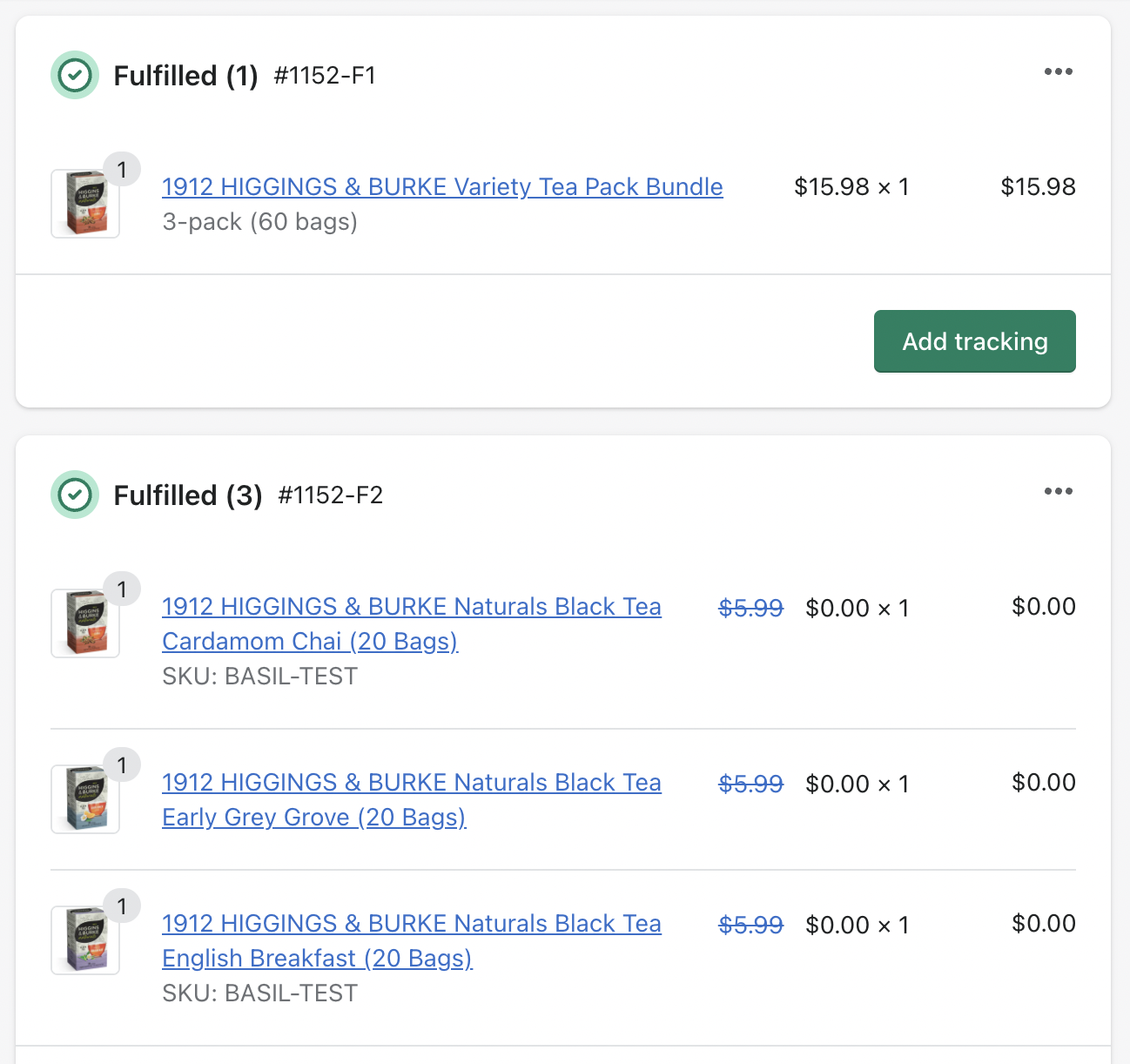
Without this, warehouses and 3PLs are forced to guess. That’s when you see:
How to test it before you commit: Create a bundle with a variant product → place a test order → check Shopify inventory for the specific variant SKU.
One of the most common complaints about bundle apps is that inventory “feels separate” or becomes hard to reason about.
Even when deductions technically happen, merchants often experience the system as opaque—especially once you introduce multiple locations, shared components, or support interventions.
A good bundle builder should make inventory behavior easy to predict:
When this is missing, teams start adding manual buffers, disabling bundles during promo periods, or relying on customer support to “clean up” the mess after oversells. Those are symptoms of a bundle system that isn’t truly inventory-safe.
Many bundle apps rely on rigid widgets and fixed layouts that are difficult to adapt to your brand or theme. They work at first, but over time become fragile as themes evolve, cart drawers change, or mobile layouts break.
What to look for instead:
This is where metafields become especially important.
Some builders like Simple Bundles expose bundle structure and configuration through Shopify metafields. That allows themes or custom front ends to read bundle data directly and render it however the brand chooses.
For example, when bundle composition, pricing breakdowns, or configuration rules are available as metafield data, a developer can:
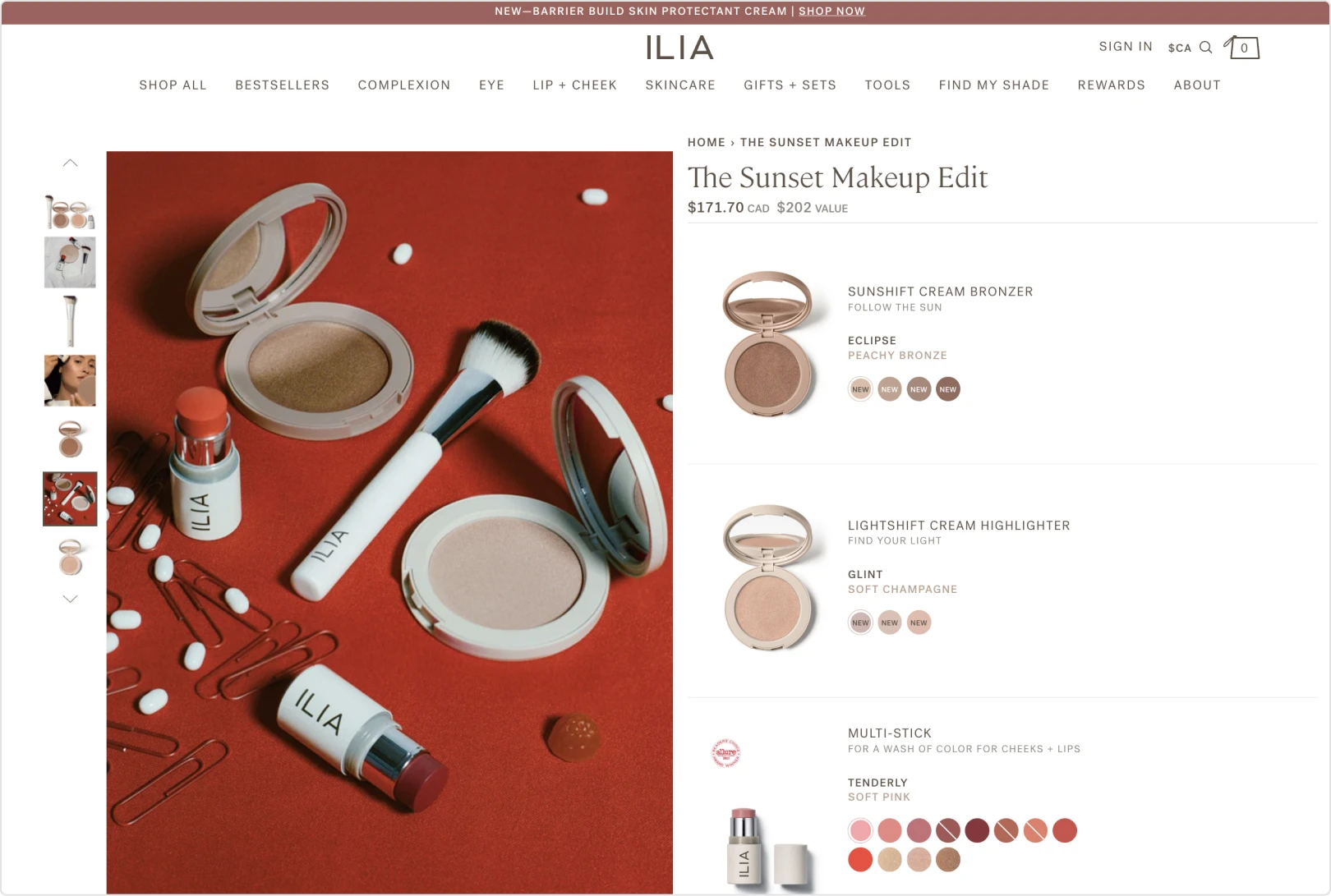
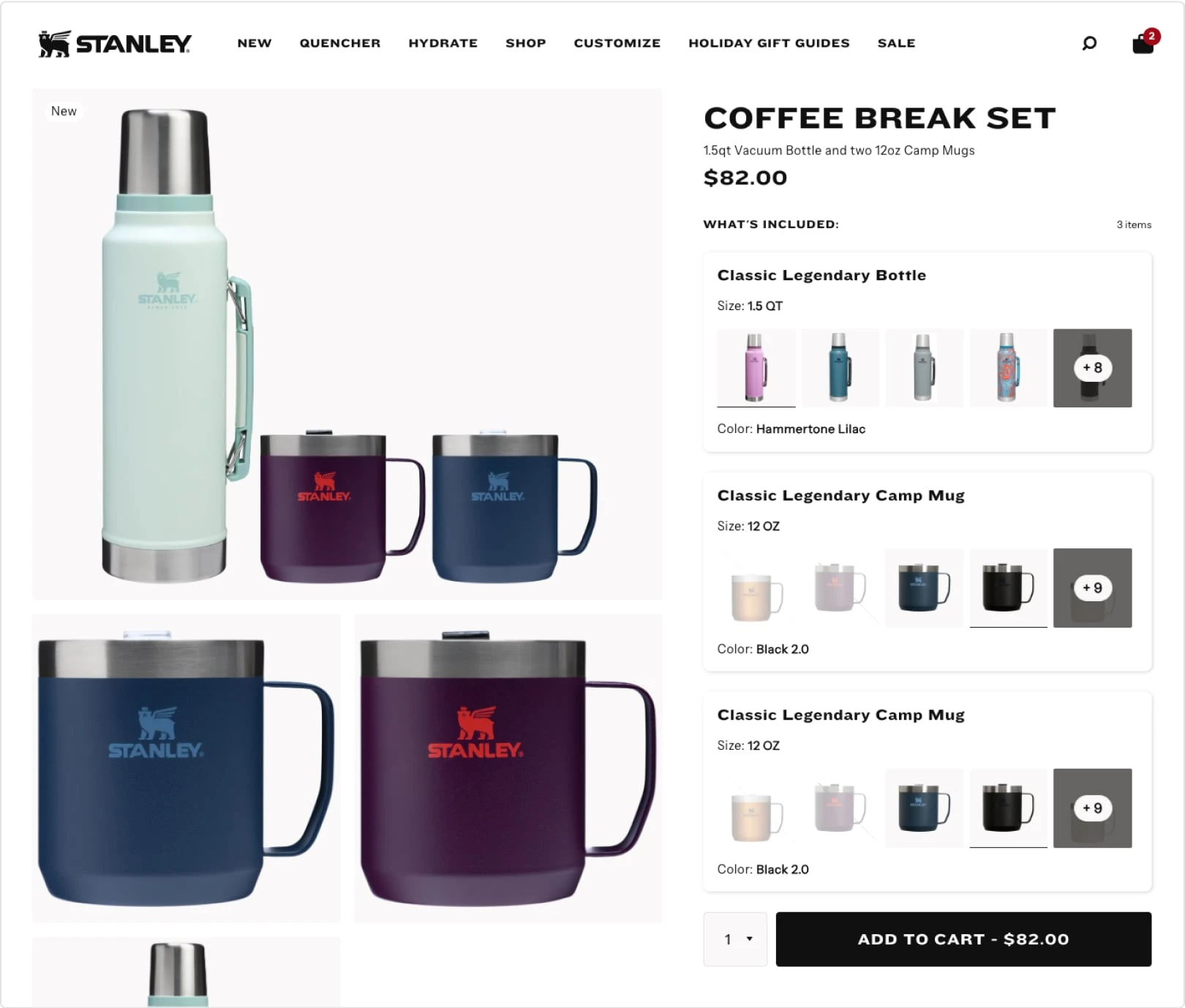
Here’s an example from a few of our customers:
Ilia Beauty:
Stanley:
Loop Earplugs:
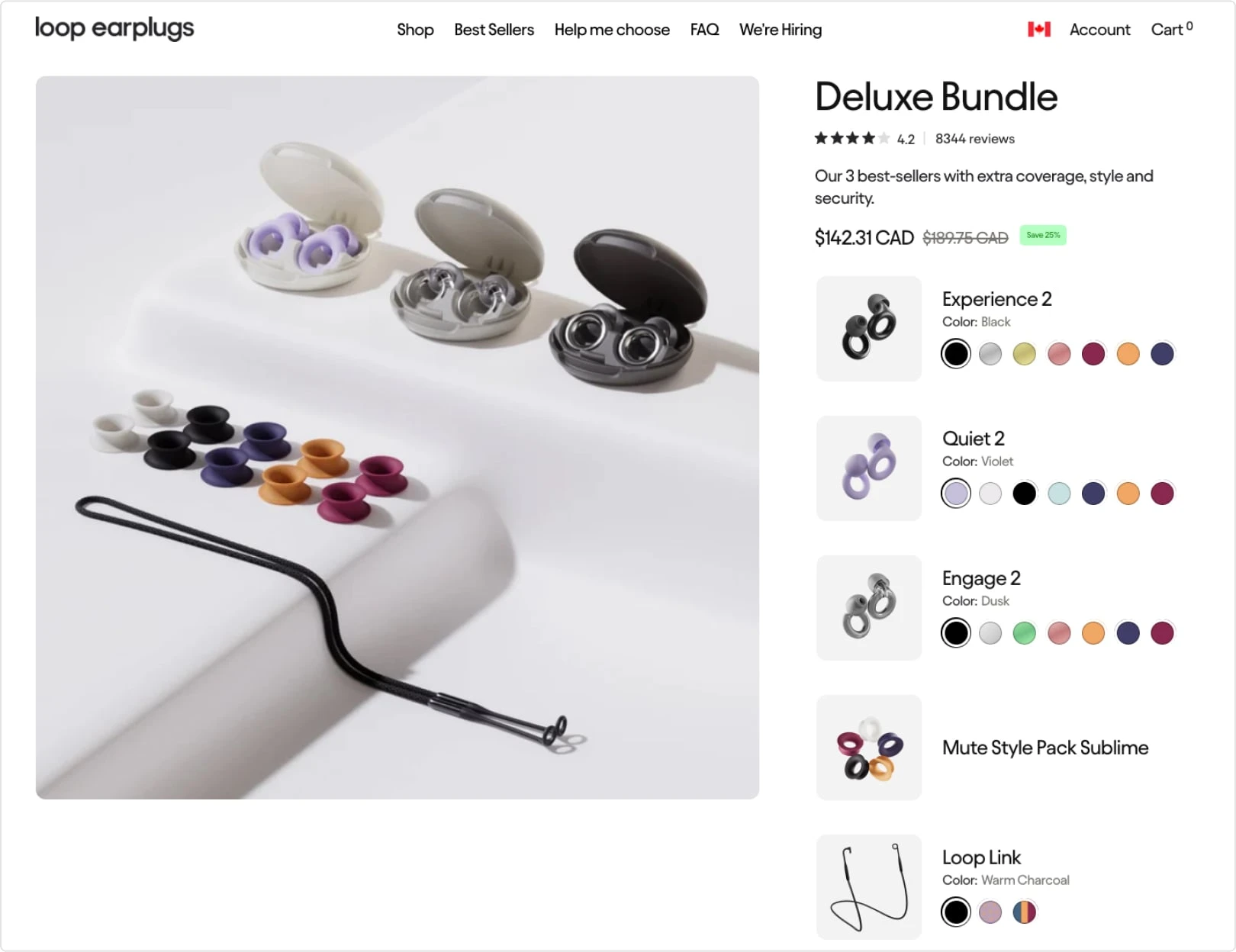
You can see how each of these feel completely on-brand to the rest of the store’s experience.
The more a bundle builder treats front-end customization as a data problem (expose clean, structured bundle data) rather than a widget problem (lock everything into a predefined UI), the more future-proof it becomes.
Real commerce is messy. Customers choose the wrong option. Support needs to swap a component. Ops needs to correct an order before it ships. Returns require adjustments.
Merchants often discover too late that their bundle setup is rigid:
A bundle builder doesn’t need to solve every support workflow for you, but it should avoid making order correction impossible. If your bundles create operational dead ends, your support load rises and your team becomes afraid to push bundling harder.
Build-your-own bundle experiences can convert extremely well—when they feel smooth. But they can also fall apart in one of the most frustrating ways: the “everything is sold out” error that gives no clue what the shopper did wrong.
A common scenario looks like this:
A customer is building a gift box. They choose “Limoncello Macaron” in a quantity higher than available inventory (11 chosen, 10 in stock). Instead of saying “Limoncello has only 10 left,” the builder marks the entire bundle as “sold out.” The shopper has no idea which selection broke the bundle, and the experience feels buggy.
A good bundle builder should:
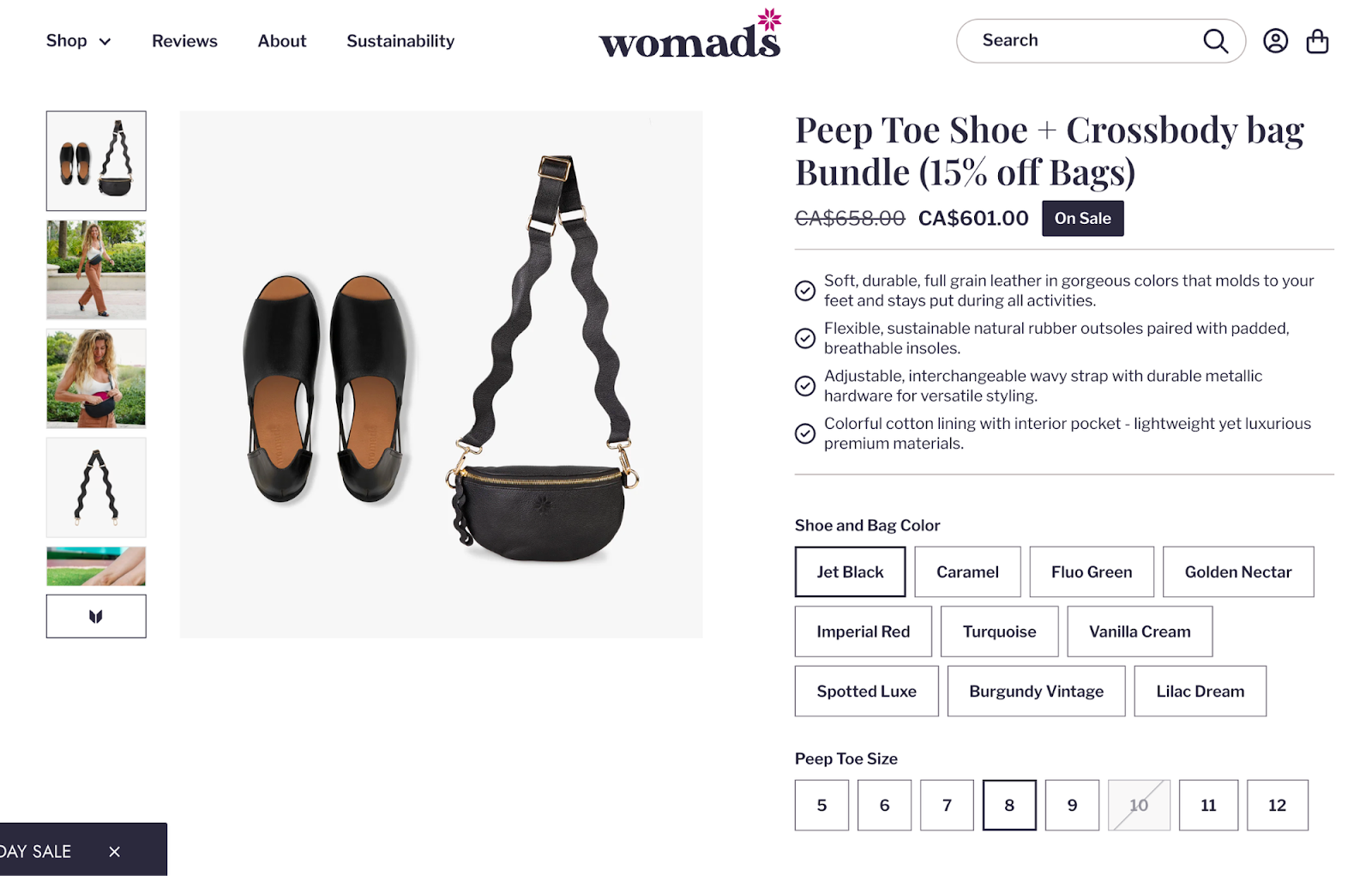
For example, you can see how this works with Womads, a sustainable shoe and bag brand. For this bundle, the size 5 shoes are out of stock for the colors “Spotted Luxe”, “Burgundy Vintage” and “Lilac Dream,” which marks the entire bundle out of stock to purchase.
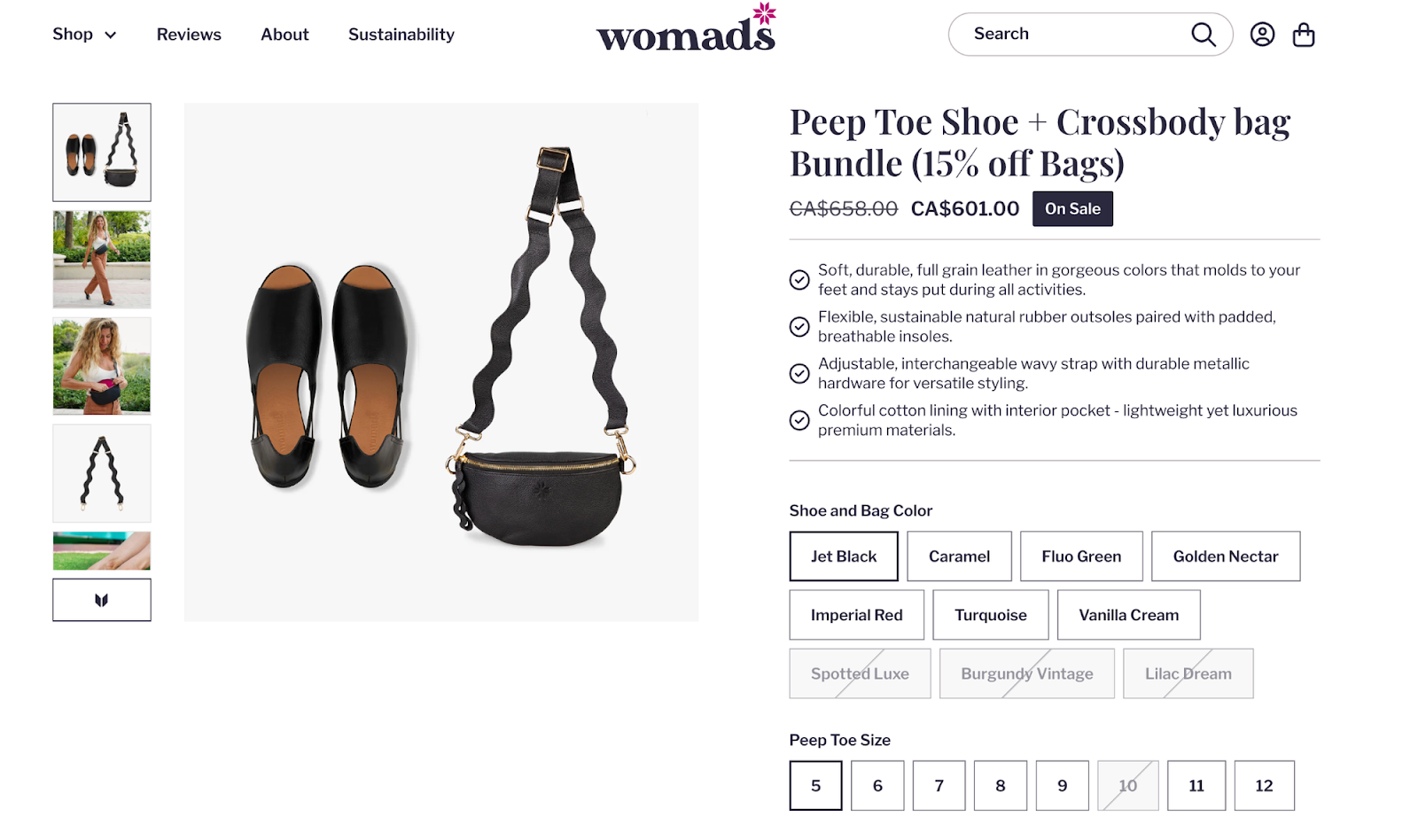
But as soon as you change the shoe size to 8, these colors are now in stock and available to order:
BYOB flows require trust: the shopper is investing time building something, and confusing “sold out” states destroy that trust.
Many merchants say it bluntly: “Most bundle apps are bloated JavaScript nightmares.”
They aren’t wrong. Bundle builders often load heavy scripts on product pages, inject complex UI into cart drawers, and manipulate pricing or selections client-side. That can:
Speed is not a luxury. If bundling costs you conversion, you’ve undercut the whole point.
When evaluating apps, look for signs of a performance-first approach:
You don’t need to be a performance engineer to evaluate this. Install the app, test your most important product pages on mobile, and compare speed and behavior before/after.
Bundles often combine products with very different margins. That’s where “flat bundle pricing” creates hidden problems.
Imagine a bundle with three products:
If you apply a flat 15–20% discount across the entire bundle, you’re giving away margin on the tight item in a way that can turn profitable revenue into break-even volume.
That’s why item-level pricing matters. It lets you:
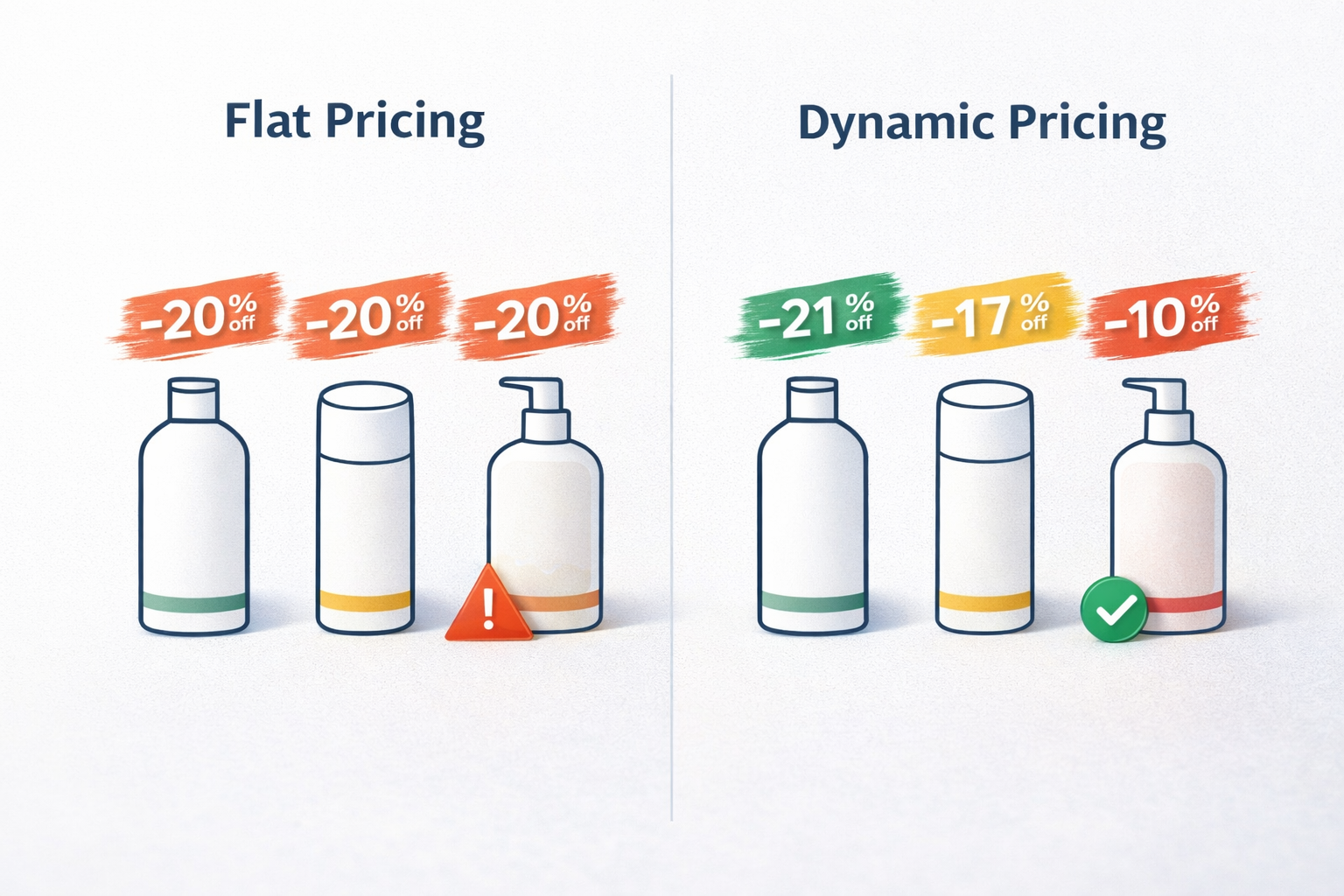
If you sell products with uneven margin profiles, you should at least ensure your bundle builder gives you pricing control beyond “one flat discount on everything.”
Fixed bundles assume customers want exactly what you chose. That’s often not true.
A huge amount of incremental revenue comes from the customer who wants the base bundle… plus one more thing.
Add-ons matter because they let you keep the core decision simple (“this is the set”), while offering optional upgrades without creating endless separate bundle products.
Examples:
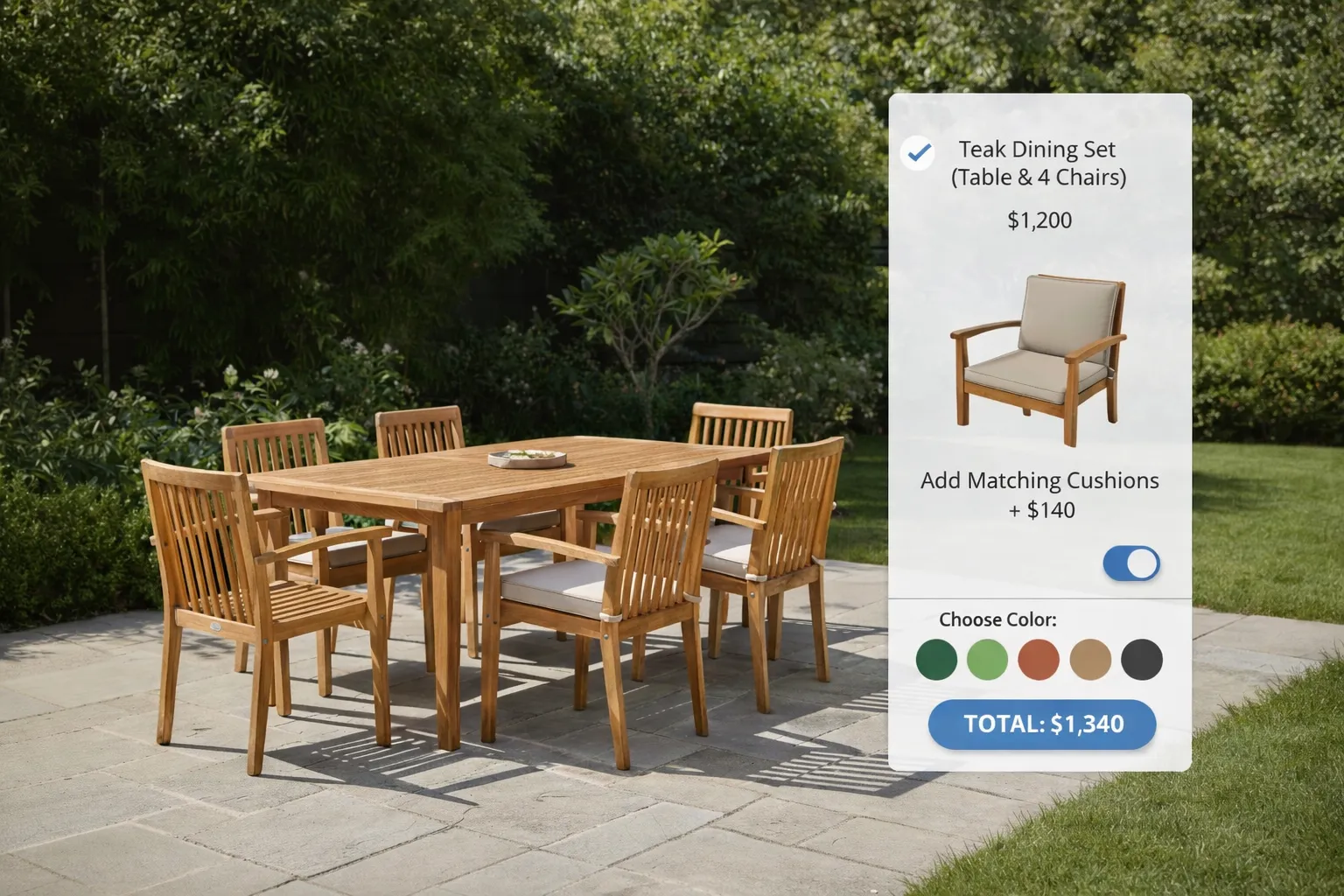
The best add-on systems keep the experience coherent:
This is one of the cleanest ways to increase AOV without bloating your catalog.
This is the feature most merchants don’t realize they need—until their bundle revenue is meaningful and the reporting becomes unintelligible.
The problem looks like this:
Your analytics dashboard shows “Blue T-shirt (M)” and “White socks (3-pack)” sold. But you can’t tell they were sold together as “Summer Basics Bundle” at a 15% discount. Your external systems don’t know the product bundle existed. They only know individual SKUs sold.
That missing context makes it hard to answer basic business questions:
Look for a bundle builder that can preserve bundle relationships as structured data attached to the order—ideally in a format external systems can parse cleanly (JSON is the practical standard).
If bundles aren’t operationally predictable, they become a constant source of friction:
If you want to learn more about bundles and your backend systems working in harmony, check out this video:
A bundle builder should support the operational reality that Shopify bundles create:
A. Fulfillment clarity
B. Shipping accuracy
Shopify calculates shipping based on component weight/dimensions/origin. If component data is wrong or bundles trigger multi-origin fulfillment, shipping becomes the largest hidden cost in your bundle program.
C. Returns logic
Bundles force you to define policies:
You don’t need one app to solve your entire returns policy, but your bundle structure must not make returns impossible to reconcile.
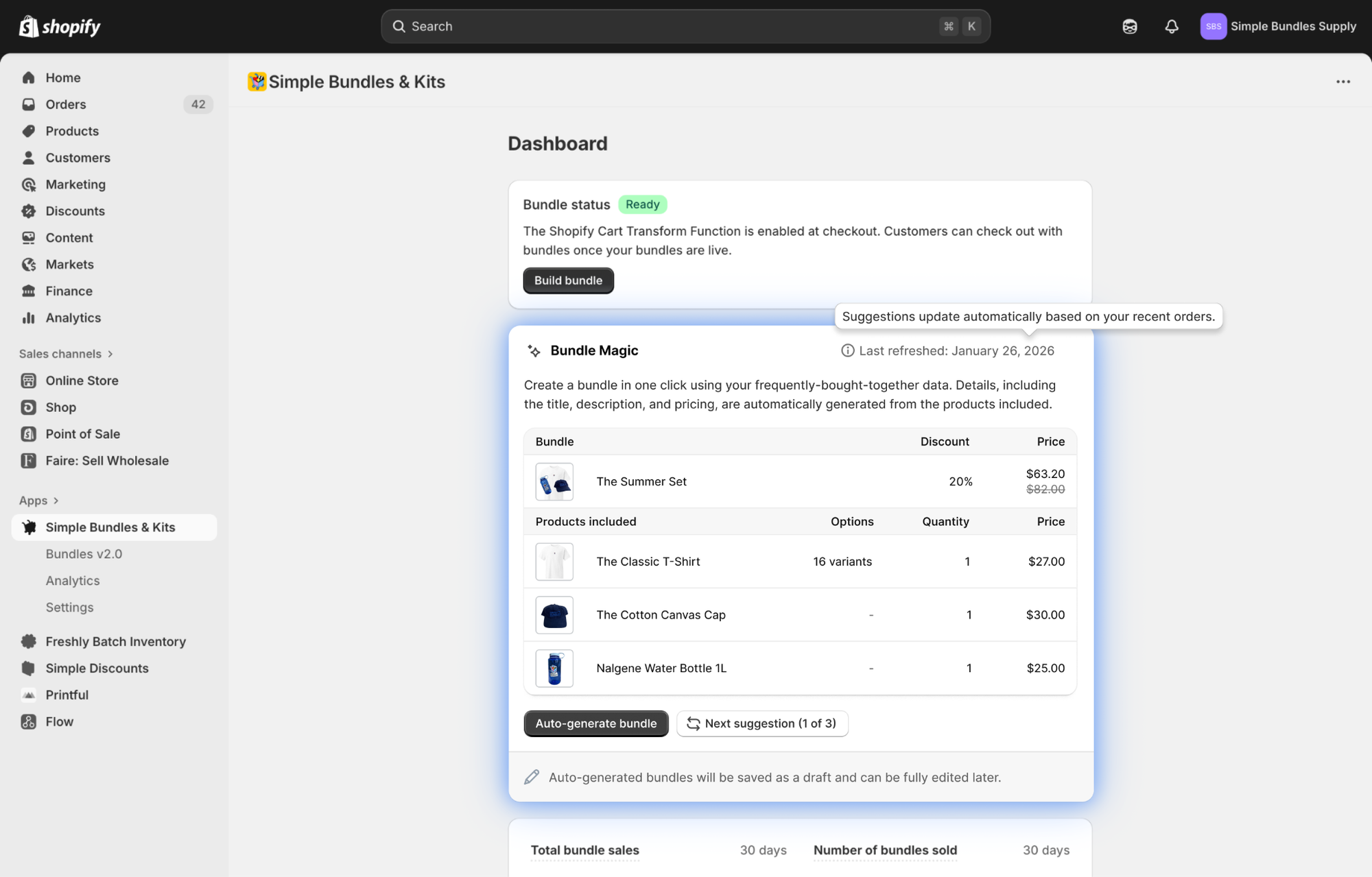
Simple Bundles is designed for brands that want beautiful, fully customizable bundle experiences—from mix-and-match, BOGO, free gift with purchase, and more—without sacrificing inventory accuracy, fulfillment reliability, or Shopify-native behavior.
Simple Bundles has a free plan that lets you create up to three bundles of any type. You can install our app here.
Bundle fulfillment works differently than single-product orders. If your team doesn't understand those differences, mistakes are inevitable.
This strategy takes five minutes and requires no code.
Every completed checkout is a data point showing what your customers actually want to buy together.

