Basil is the Co-Founder and CTO of Simple Bundles, where he leads product strategy and development. With deep experience building scalable systems for merchants, he specializes in the technical and operational challenges for back-office operations.
Bundling strategies
The product bundle pricing secrets premium brands use
Product bundle pricing is one of the most effective ways to increase average order value. This guide explores the psychology and economics behind successful bundling, including why bundles increase perceived value, how top brands structure their offers, and the pricing frameworks that drive results.
Basil is the Co-Founder and CTO of Simple Bundles, where he leads product strategy and development. With deep experience building scalable systems for merchants, he specializes in the technical and operational challenges for back-office operations.
Most articles about product bundle pricing give you the same generic advice: "offer a discount" and "combine complementary products."
Thanks, very helpful...
The part they don't tell you? The brands crushing it with bundles are using specific pricing strategies to create package deals that aligns with customer needs, increases perceived value, and helps retailers increase sales while protecting profitability.
I'm talking about a sophisticated mathematical engine that powers the world’s most profitable premium brands.
When executed correctly, bundling transforms a simple product into a comprehensive solution, shielding your margins from price wars and elevating your brand above the noise of the commodity market.
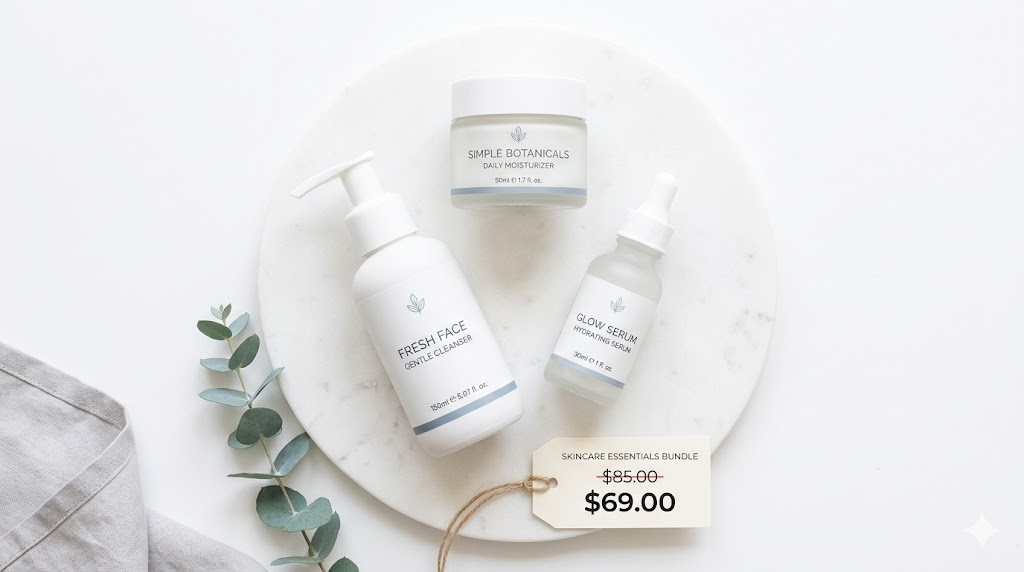
Bundle pricing done right: multiple products, one clear value proposition.
The mathematics of value capture
The reason economists love bundling is because it mathematically maximizes the "consumer surplus", which is the difference between what a customer is willing to pay and what they actually pay.
Reducing the variance in reservation prices
Every customer has a "reservation price." This is the absolute maximum they're willing to pay for a specific item.
Imagine Customer A values an ecommerce brand’s Premium Shampoo at $100 and its Travel-Size Add-On at $20.
Customer B values the Premium Shampoo at $30 and the Travel-Size Add-On at $90.
If you sell them individually, you struggle to set a price that captures both customers without leaving money on the table. But if you bundle them for $120, both customers see value (Customer A sees $120 of value, Customer B sees $120 of value).
By bundling, you reduce the "variance" in how different customers value individual parts, allowing you to capture a much higher average revenue per user.
The psychology and profit of the "everything everywhere" offer
At its core, bundling works because human beings are notoriously bad at calculating the value of individual components when presented with a unified "outcome."
We don't buy a drill and a drill bit; we buy the ability to put a hole in the wall.
When a business offers an "Everything Everywhere" package, they are shifting the customer’s focus from the cost of the parts to the utility of the whole.
From a psychological standpoint, bundling reduces "purchase pain." Every time a consumer sees a price tag, the brain’s insula—the same area associated with physical pain—is stimulated. By grouping multiple items into a single price point, you trigger that pain response only once.
For premium brands, this is the secret to maintaining high-ticket prices without exhausting the customer’s goodwill. You aren't nickel-and-diming them; you're providing a seamless, painless gateway to a premium experience.
Increasing the average order value (AOV)
The math here is simple but profound. It is significantly cheaper to sell an additional $50 of value to an existing customer than it is to go out and find a new customer.
Bundling is the most effective lever for increasing AOV because it bridges the gap between a customer’s primary need and their secondary desires before they even leave the checkout page.
Many brands use bundles as an upsell or cross-sell opportunity during checkout. By presenting complementary products alongside a customer's primary purchase, businesses can increase average order value (AOV) without creating friction in the customer experience.
This approach resembles Amazon's 'frequently bought together' recommendations by giving customers control while encouraging them to add more products to their carts.
Types of bundle pricing
There are several types of bundle pricing that brands use depending on their goals, inventory mix, and customer behavior. Understanding these approaches helps businesses choose the right bundle pricing strategy for their products.
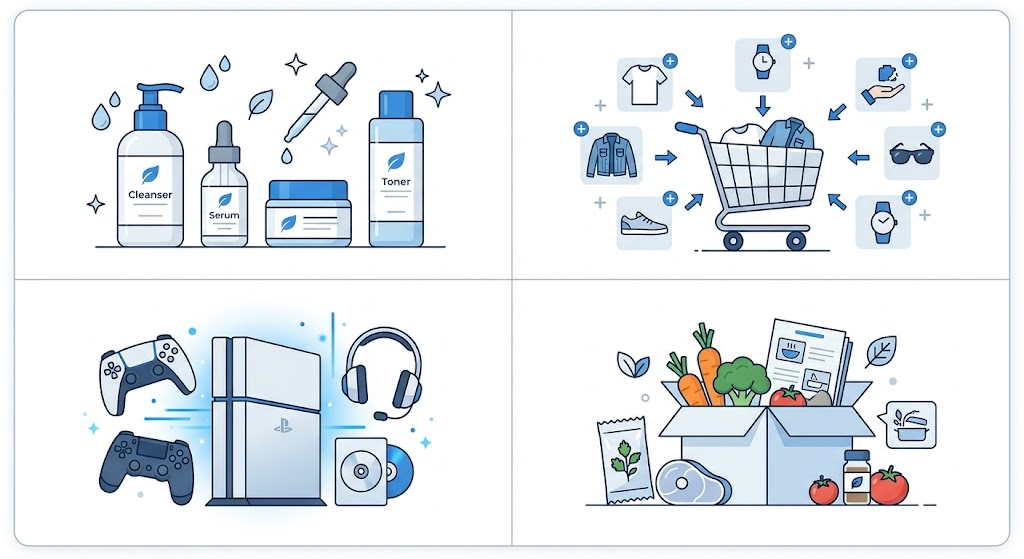
From skincare routines to meal kits, successful bundles come in many forms.
Pure bundling requires customers to purchase products only as part of a bundle. Cable subscriptions and many SaaS packages are common examples.
Mixed bundling allows customers to purchase either the bundle or the individual items separately. This is one of the most popular approaches in ecommerce because it gives shoppers flexibility while still encouraging larger purchases.
Other common approaches include leader bundling, where a popular product is paired with add-ons, BOGO promotions, and mix-and-match bundles that allow customers to select bundle items themselves.
Let's look at a few specific examples.
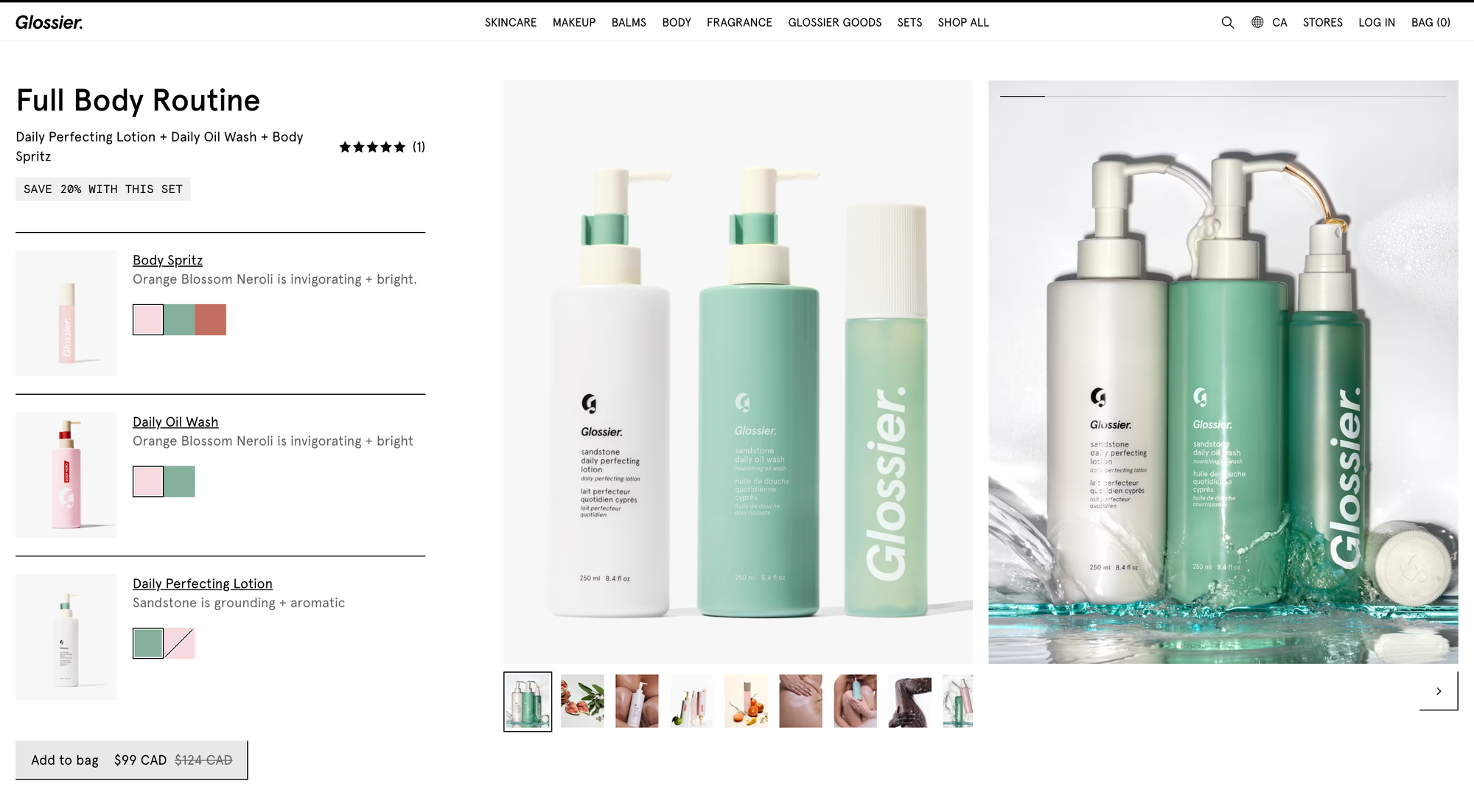
Example 1: Routine-based bundles (Glossier)
What they sell: Skincare sets bundled as "complete routines."
Pricing strategy: Slight discount compared to buying items individually, but the emphasis is on the complete solution, not the savings.
Why it works: Glossier sells "the routine," not three separate products. Customers buy the outcome: moisturized skin, a simpler morning, fewer decisions. The $25 savings barely registers.
This is value-based pricing in action. The bundle price reflects the outcome, not just the sum of the parts.
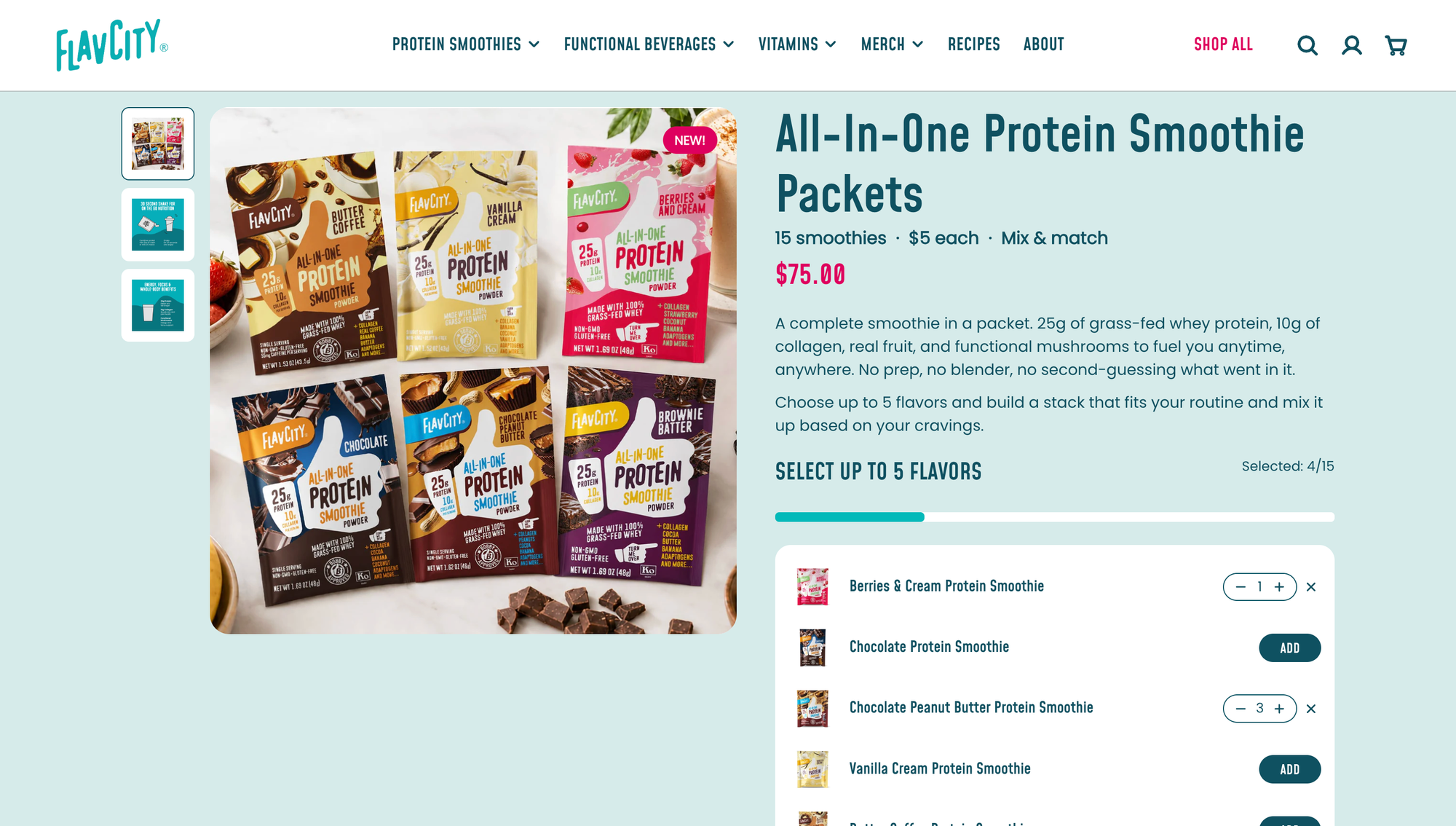
What they sell: Choose-your-own sets where customers pick from a curated selection.
Pricing strategy: Fixed bundle price regardless of which items the customer selects. "Pick any 15 for $75."
Why it works: Customers feel in control. They're making choices, which increases perceived value. When given flexibility, customers often spend more than they would on a pre-built bundle because they feel like they're getting exactly what they want.
The fixed price tier creates clarity. No complicated discount calculations.
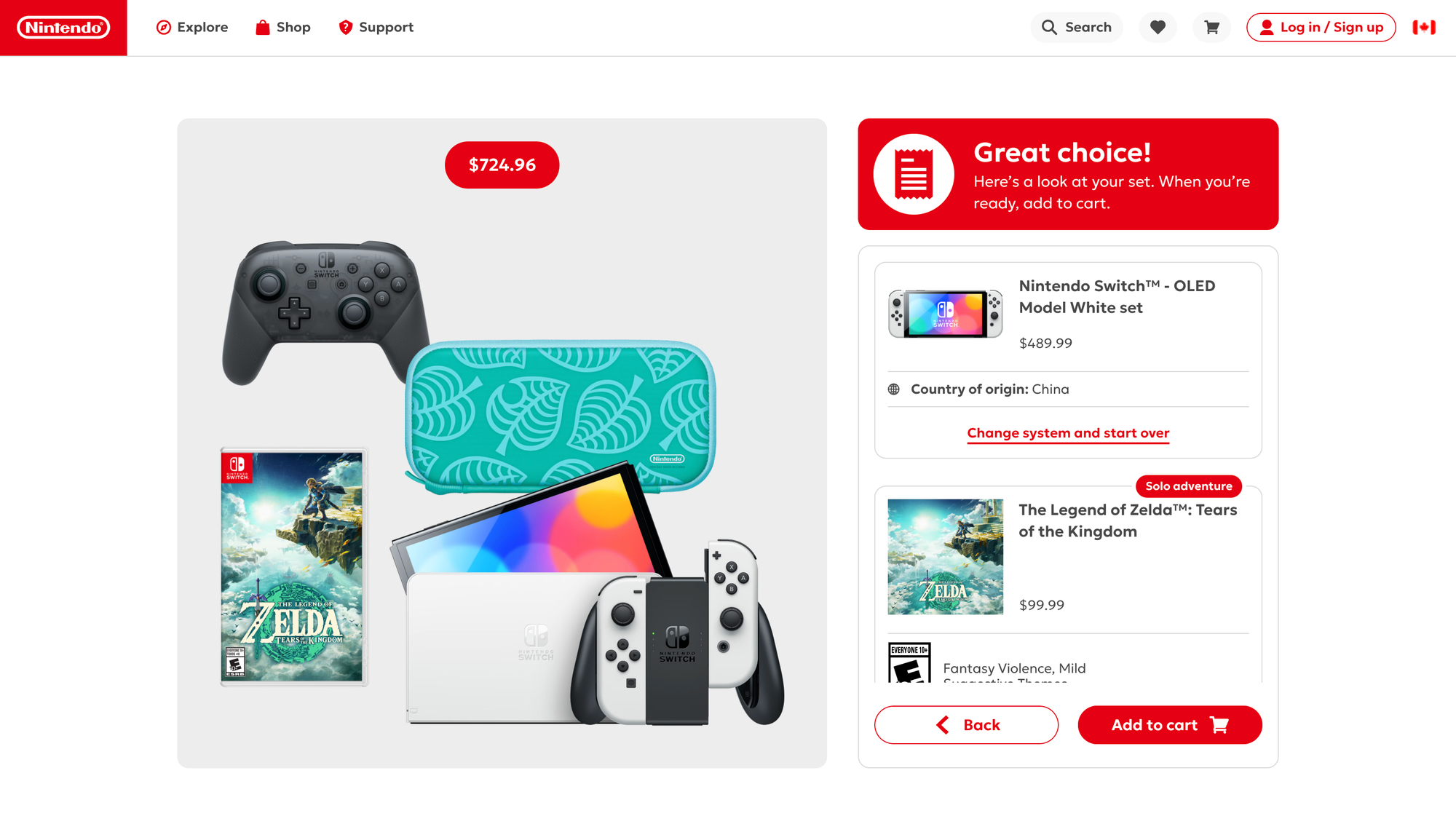
Example 3: Leader plus add-on bundles (Nintendo)
What they sell: Console plus games, accessories, and more.
Pricing strategy: Anchor product at full price, bundled with high-margin add-ons.
Why it works: The anchor product drives the purchase decision. Nobody buys a Nintendo because the controller was discounted. But once they've committed to the console, adding accessories feels logical.
The bundle increases total revenue while making the customer feel like they're getting everything they need in one purchase.
This is a classic example of leader bundling, where a bestselling product drives the purchase decision and higher-margin add-ons increase total revenue.
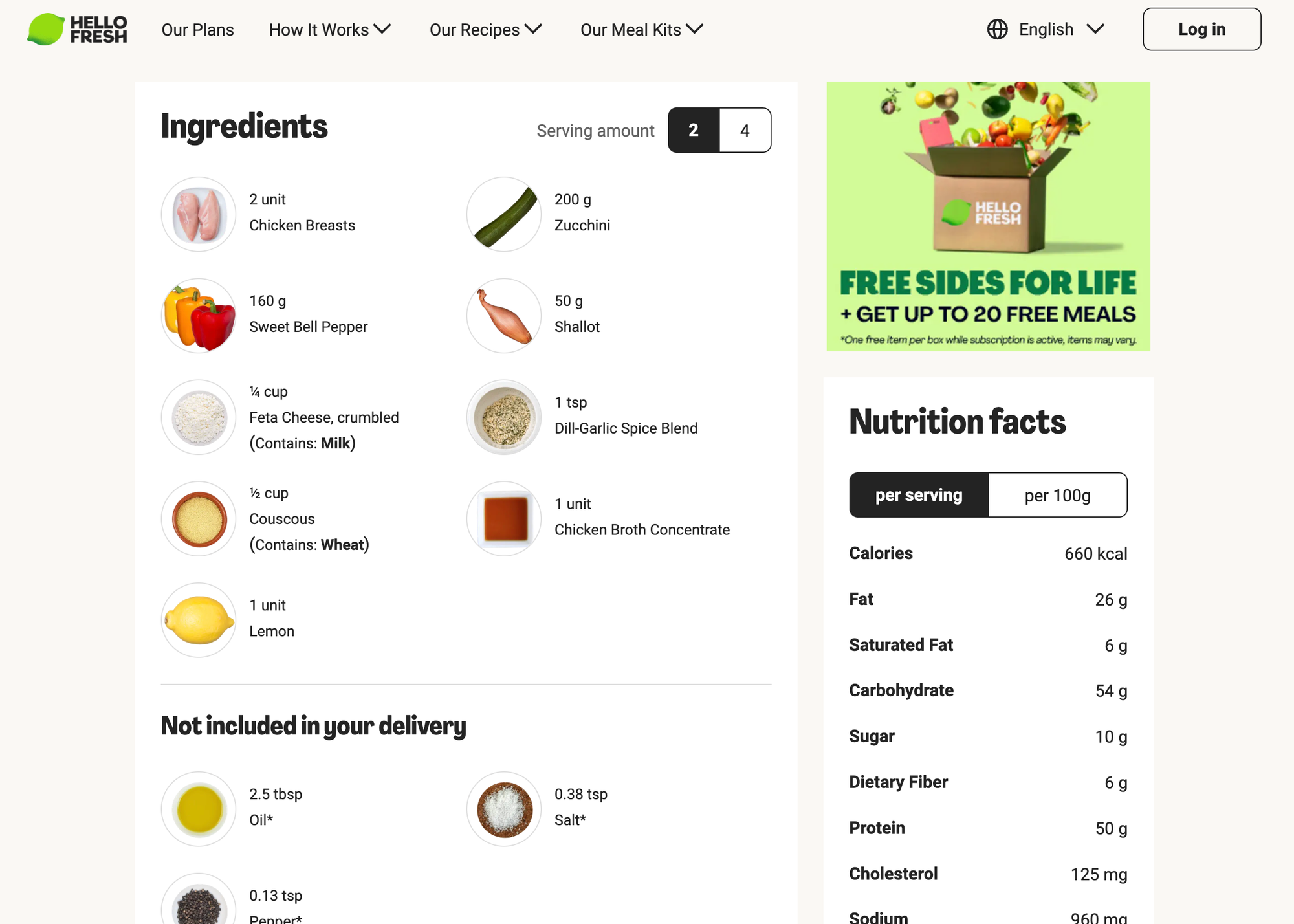
Example 4: Experience bundles (HelloFresh)
What they sell: Meal kits priced as "dinners for 2" or "dinners for 4" rather than ingredients.
Pricing strategy: Price based on the outcome (a meal) rather than the components (groceries)
Why it works: If HelloFresh priced their boxes as "2 lbs chicken, 1 lb vegetables, spices, and sauce," customers would compare prices to the grocery store. And they'd lose.
Instead, they price by the meal. "$9.99 per serving" sounds reasonable for dinner. The bundle reframes the value proposition entirely.
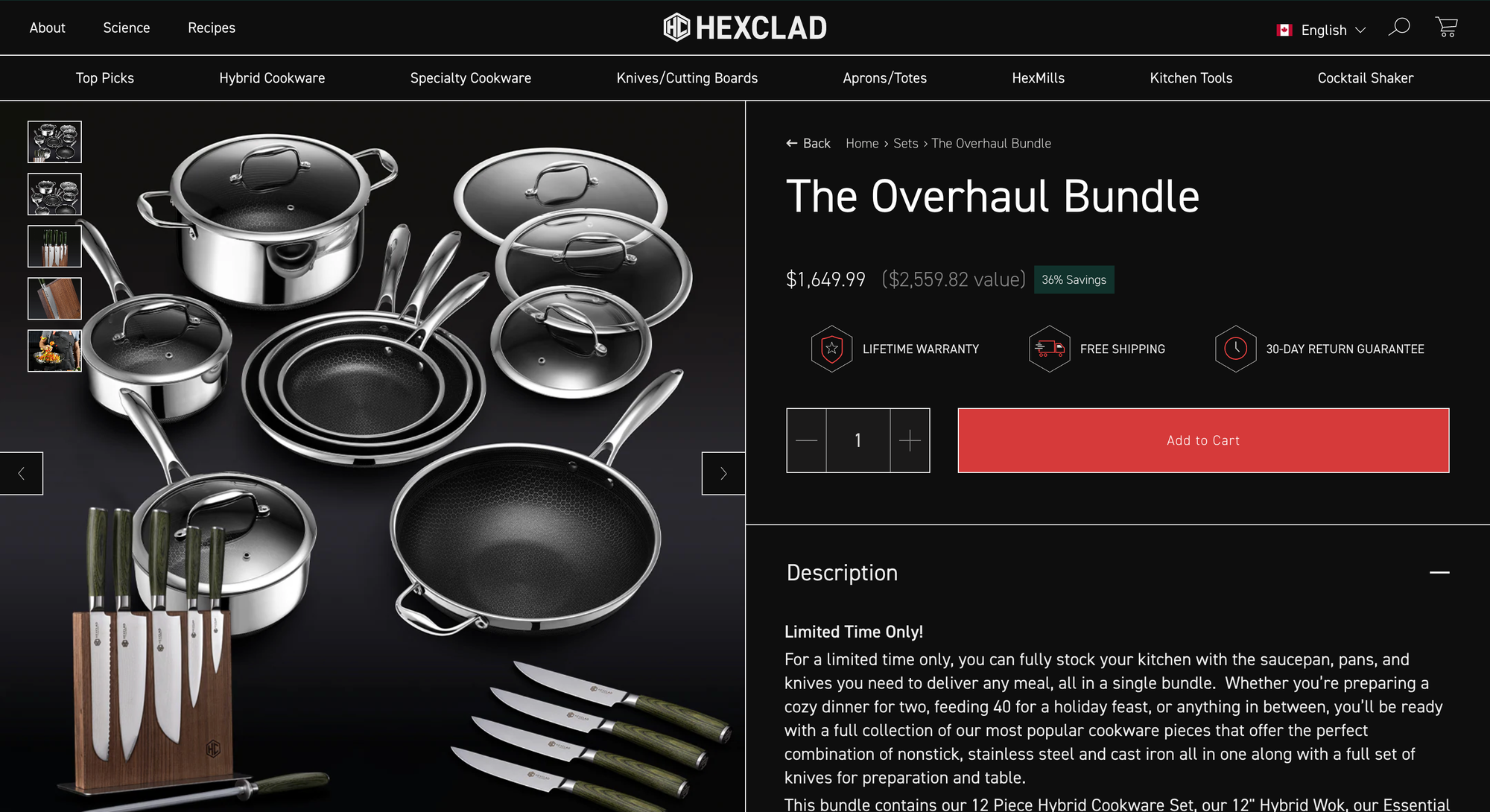
Example 5: Premium value bundles (HexClad)
What it looks like: One or a few higher-priced hero products, plus accessories bundled. In this case, each HexClad pan runs for hundreds of dollars, whereas the knives are lower cost.
Pricing strategy: Total exceeds what customers might spend individually, but perceived savings are significant. It looks like almost $1,000 off in HexClad's case.
Why it works: The customer sees "36% savings." The business sees a $1,649.99 order because many customers wouldn't have bought the knives separately.
This is the bundle pricing sweet spot: the customer wins, the business wins, and average order value goes up.
These bundle pricing examples show that successful brands rarely compete on lower price alone. Instead, they focus on perceived value, convenience, and customer satisfaction to create a win-win outcome for both the customer and the business.
Three frameworks on how to price product bundles
All five pricing examples above use one of these three pricing approaches. Understanding which one fits your products makes everything else easier.
Framework 1: Discount-based pricing
How it works: Bundle price is less than the sum of individual products
Best for: Commodity products, price-sensitive customers, clearing inventory
The calculation: Take your individual prices, add them up, then apply a percentage discount (typically 10 to 25 percent).
Watch out for: It's easy to over-discount. If your margins are already thin, aggressive bundle discounts can turn profitable products into loss leaders. Compare the bundle's total price against the combined single prices of the individual items. Customers need to clearly see the savings to justify the purchase decision.
Framework 2: Value-based pricing
How it works:Bundle price reflects the outcome or solution, not the component costs
Best for: Premium brands, solution-oriented products, experience-driven purchases
The calculation: What would customers pay for this result? Price backwards from the outcome.
Example: A "complete home office setup" bundle might be priced at $599, even if the components total $520, because the value is in the curated solution. When customers view the bundle as a complete solution, they're less likely to compare each single item separately.
Framework 3: Anchor pricing (good, better, best)
How it works: Multiple bundle tiers where the middle option is designed to look like the best value
Best for: Products with natural upgrade paths, customers who compare options
The structure:
Good: Basic bundle at accessible price
Better: Mid-tier bundle with best value perception (this is where most customers land)
Best: Premium bundle that makes the middle tier look reasonable
This uses the decoy effect. The "best" tier isn't meant to sell in high volume. It's meant to make "better" look like a smart choice.
The missing piece: price sync
You can have the perfect pricing strategy, but if your bundle prices don't stay in sync with your component prices, none of it matters.
Most brands set their bundle prices manually when they create the bundle. Then a customer purchases and the following happens:
A supplier raises prices and you update your products
You run a sale on individual items but forget about bundles
A variant goes out of stock and gets replaced
Your team updates pricing in Shopify but the bundle stays static
Suddenly your margins are wrong, your pricing looks inconsistent, and your reporting is a mess. For Shopify merchants managing large catalogs, automated bundle discounts and real-time price synchronization reduce manual work while ensuring bundle profitability remains intact.
How price sync solves this
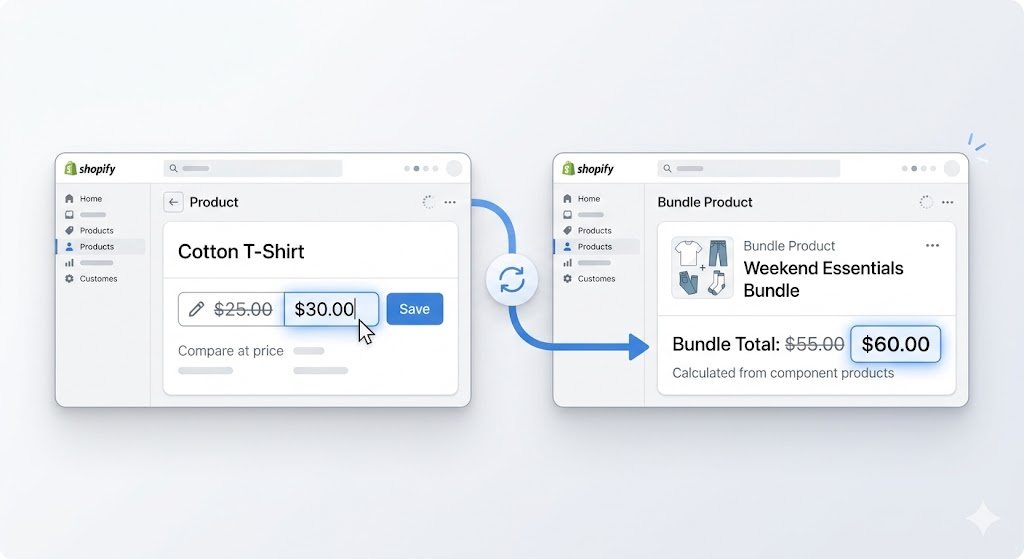
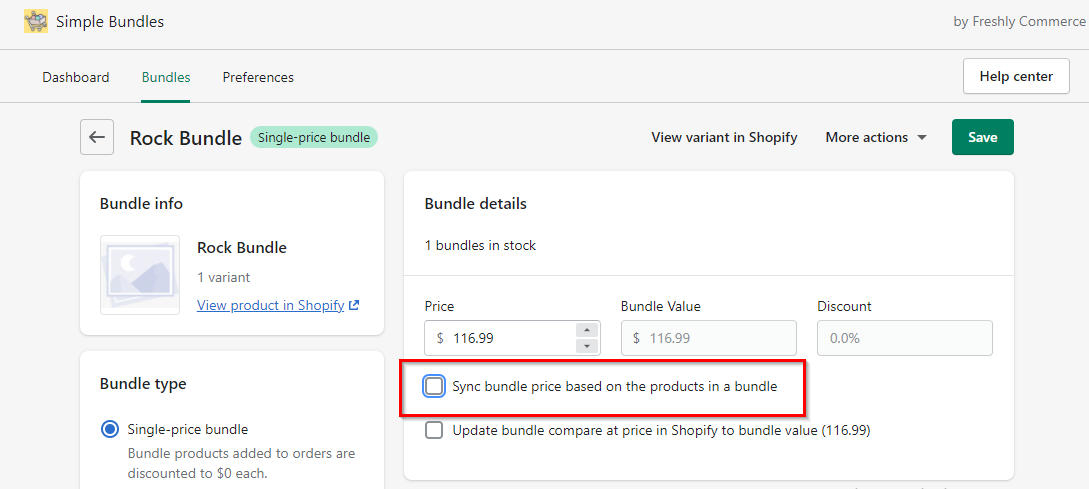
Price sync means your bundle price is derived from your component prices, not set independently.
When you enable price sync, the bundle total is determined by the individual item prices. Change a product price in Shopify, and the bundle price updates automatically.
Price sync automatically updates bundle totals when component prices change.
How Simple Bundles handles this:
When no discount is applied in Simple Bundles, price changes made to products in Shopify automatically affect the bundle price. A $5 increase on a component means a $5 increase on the bundle.
When you've set a specific discounted price for an item in the bundle, that price locks in and doesn't change when the base product price changes. This gives you control over promotional pricing while keeping standard pricing dynamic.
Why price sync matters for scaling
1. Protects margins: No more accidental over-discounting because someone updated a product but forgot about the bundle.
2. Keeps pricing consistent: Customers comparing your bundle to individual products see logical pricing, not confusing mismatches.
3. Enables dynamic bundles: Mix and match bundles, free gift bundles, and tiered pricing all depend on accurate component-level pricing. Without sync, these become maintenance nightmares.
For bundles where items are priced separately (customers see each component's price), price sync is enabled by default in Simple Bundles. The bundle price always equals the sum of the parts, automatically.
Common bundle pricing mistakes
Before we wrap up, here are the pricing mistakes that sink otherwise good bundle strategies:
Pricing too aggressively: A 40% discount sounds appealing until you realize you're losing money on every sale. Calculate your margins before setting bundle discounts.
No differentiation from individual products: If your bundle saves customers $2 on a $50 purchase, why would they bother? The value needs to be obvious.
Ignoring inventory relationships: Bundle pricing only works if the products are actually available. Selling a bundle when one component is backordered creates customer service headaches.
Not syncing prices with components: We covered this, but it's worth repeating. Manual bundle prices become wrong over time. Always.
Best practices for bundle pricing
Keep perceived savings clear: Customers should understand the value at a glance. Show the "would be" price alongside the bundle price.
Anchor against individual pricing: Display what items cost separately. The comparison makes the bundle value obvious.
Use bundles to move slow inventory: Pair high-demand items with slower-moving products. The bundle becomes a vehicle for inventory management.
Combine high and low margin items: A high-margin accessory bundled with a low-margin anchor product improves overall bundle profitability.
Test pricing tiers: If you're not sure whether to discount 15 percent or 20 percent, test both. Small pricing changes can significantly impact conversion.
Wrapping up
Product bundle pricing is both a strategy and an infrastructure problem.
The bundling strategy part is choosing the right approach: discount-based, value-based, or anchor pricing. Understanding what makes your customers buy and structuring bundles around outcomes rather than products.
The infrastructure part is making sure your pricing actually works at scale. That means syncing bundle prices to component prices so everything stays accurate as your catalog changes.
This guide breaks down how Shopify POS bundles actually work, the limitations of native bundling, and how growing brands create flexible bundle experiences with real-time inventory syncing and smooth in-store checkout flows.
The article walks through a four-step setup framework, including SKU mapping, automatic inventory syncing, and order testing, while also sharing conversion best practices to help three-pack bundles increase AOV and drive more sales.
In this guide, we’ll share 15 product bundling tips, real ecommerce examples, and Shopify-specific strategies to help you create bundles customers actually want to buy.